


1. 1-Sentence-Summary:
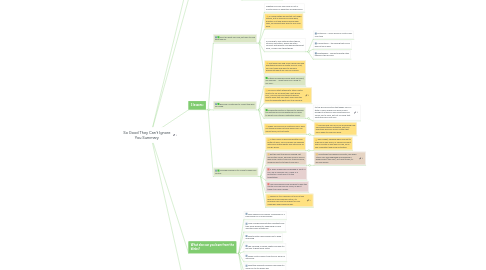
1.1. So Good They Can’t Ignore You sheds some much needed light on the “follow your passion” myth and shows you that the true path to work you love lies in becoming a craftsman of the work you already have, collecting rare skills and taking control of your hours in the process.
2. Favorite quote from the author:
2.1. "If you don't produce, you won't thrive - no matter how skilled or talented you are." - Cal Newport
3. 3 lessons:
3.1. Don’t do what you love, but learn to love what you do.
3.1.1. Whether you love your work or not is mostly based on expertise and experience.
3.1.2. All career paths would start out rough initially, but as long as you work hard, practice a lot and keep acquiring new skills, you’d eventually learn to love your work
3.1.3. According to self determination theory, intrinsic motivation, which we often connect with passion and being satisfied at work, comes from three things:
3.1.3.1. Autonomy – some sense of control over your time
3.1.3.2. Competence – the feeling that you’re good at your work
3.1.3.3. Relatedness – connecting with other people in the process
3.1.4. That means as long as you work hard and eventually become a master of your craft, you can thrive and learn to become passionate about any job you choose.
3.2. Become a craftsman to collect the skills you need.
3.2.1. Instead of asking yourself what you want, ask yourself - “What value can I bring to my job?”.
3.2.2. Once you start listening to Steve Martin and try to “be so good they can’t ignore you”, you’ll be so busy trying to deliver quality work that you won’t even have the time to deliberate what your true calling is.
3.2.3. Deliberate practice is the way to develop the autonomy and competence you need to boost your intrinsic motivation levels.
3.2.3.1. It’s the kind of practice that keeps you in a state of flow, where your work is hard enough to make you uncomfortable and forces you to learn, but not so much that frustration wins you over.
3.2.4. When you become a craftsman you’ll seek out those problems at work which you can almost solve, but not quite.
3.2.4.1. This will help you focus on developing new skills while staying motivated, until you eventually become such a master that you’ll begin to love your work.
3.3. Consider saying no to a raise to keep your control.
3.3.1. In the course of becoming better and better at work, you’ll probably be awarded with more responsibility and autonomy as you go along.
3.3.1.1. This is great, because when you get to make your own hours, or spread a project over 6 months in any way you like, you’ll feel competent and more motivated.
3.3.2. But the next trap will be leaking just around the corner, because as soon as you gain more control over your time and work, someone will try to take it from you.
3.3.2.1. Sometimes this happens violently, like when Steve Jobs was degraded and assigned a dead project (the Mac), but most times, it’ll be even worse.
3.3.3. A shiny reward will be dangled in front of you, like a company car, a raise or a promotion. Don’t give in to the temptation!
3.3.4. You have worked long and hard to gain the control you now love so much, so don’t trade it for more money.
3.3.5. Saying no to a raise will not only let you keep your hard earned control, it’ll probably earn you the respect of your coworkers and bosses as well.