


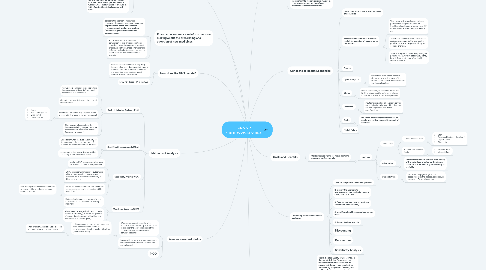
1. Incremental Cost-Effectiveness Ratio (ICER)
1.1. systematic method of identifying the difference (increment) in costs and outcome. Its generation allows for the identification of how much extra cost is incurred by an intervention for the additional benefit it provides
1.2. preferred measure of cost-effectiveness for HTA bodies such as SMC/NICE.
1.3. Quality Adjusted Life Year (QALY) combines a measure of length of life and quality of life. It is calculated by multiplying the Life Years Gained by a Utility Value. One year of life lived in perfect health is worth 1 QALY, but two years of life lived in 50% of perfect health is also equal to 1 QALY.
2. Pharmacoeconomics can inform decision making about the prescribing and adoption of new medicines.
2.1. compare the economic resources consumed (inputs e.g economic resources) to produce the health and economic consequences of products or services (outcomes e.g health and economic consequences).
2.2. Pharmacoeconomics allows the comparison of two drug interventions providing identical outcomes in terms of efficacy and effectiveness. There are four different methods of analysis that may be undertaken in a pharmacoeconomic analysis
3. How does the NHS decide?
3.1. After clinical effectiveness of any drug treatment has been demonstrated, there is a need to look to the balance of benefits and costs to make a decision about whether it should be adopted.
3.2. NICE introduced HTA in the 1999
4. Methods of Analysis
4.1. Cost-Minimisation Analysis (CMA)
4.1.1. Allows decision makers to decide which intervention provides a defined health outcome at the lowest cost
4.1.2. Considers both costs (in monetary terms) and outcomes
4.1.3. Used when outcomes may vary but can be measured in the same units (not monetary)
4.1.3.1. Cures Years of life gained Lives saved Cases avoided
4.1.4. Not meaningful in isolation; the intervention being analysed must be compared with other interventions (incremental analysis)
4.2. Cost-Effectiveness Analysis (CEA)
4.2.1. undertaken when the type and quality of the outcome is the same, but rates of success for each treatment are different
4.2.2. uses natural outcome e.g. deaths avoided, percentage reduction in cholesterol.
4.3. Cost-Utility Analysis (CUA)
4.3.1. similar to CEA except that rather using natural units, it uses a utility outcome
4.3.2. Utility measurement measures outcome on a life to death continuum where death attracts a value of zero and full quality of life a value of one.
4.3.3. values are then used to calculate treatment outcomes in terms of quality adjusted life years (QALY)
4.3.3.1. allows comparison across interventions which do not have a shared common natural outcome.
4.4. Cost-Benefit Analysis (CBA)
4.4.1. Reduces both inputs and outputs for each intervention in a common form, usually monetary
4.4.2. allows healthcare organisations to consider allocative efficiency, i.e. which programme of intervention to support rather than how best to achieve a set of goals,
5. Comparison in Economic Evaluation
5.1. When considering the results of an economic evaluation study, it is important to consider the appropriateness of the comparator that an intervention is compared against
5.1.1. If this comparator does not represent the ‘true’ local alternative model of care/treatment then the results will not be generalisable locally
5.1.1.1. often of pharmaceuticals use a placebo treatment group as the comparator
5.2. interested in whether the new treatment is more or less cost effective than the one currently used.
5.3. PICO
6. Economics
6.1. the systematic study of resource allocation used where scarcity exists and there is a need for choice to be made
6.2. help to quantify the opportunity cost (what the money/resource could have been used for if it wasn’t used for a particular intervention) to support decision makers in comparing the costs and benefits of different healthcare interventions.
7. Concepts of Health Economics
7.1. health does not follow the 'standard rules' of economics.
7.2. economics of health is not a 'perfect' market for a number of reasons, some reasons are:
7.2.1. The consumer (patient) does not have perfect knowledge of the product (healthcare) and needs an agent e.g. a GP or Pharmacist in order to decide what to do.
7.2.2. The time to train healthcare professionals restricts the entry into the market of a provider in order to response quickly to demand changes.
7.2.3. There is a degree of uncertainty facing the patient; When will they get ill? Would they benefit from health care What health care should they have?
7.3. Scarcity
7.4. Opportunity Cost
7.4.1. the value of using a resource in an alternative way i.e. the value of the alternative not chosen when resources have been allocated.
7.5. Choice
7.5.1. Due to the scarcity of resources within the NHS, 'choices' need to be taken in relation to the use of available funds and priorities
7.6. Resources-
7.6.1. inputs into providing a healthcare service are in limited supply, everything that can be used to produce and deliver good/services
7.7. Equity
7.7.1. two types, horizontal (equal treatment of equals) and vertical (unequal treatment of unequals).
7.8. Market Failure
8. Costs and Benefits
8.1. vital to measure inputs (costs) and outputs (consequences) accurately
8.1.1. input side
8.1.1.1. Direct Costs
8.1.1.1.1. 1.Direct Medical Costs
8.1.1.1.2. 2. Direct Non-Medical Costs
8.1.1.2. Indirect Costs
8.1.1.2.1. those associated with reduced productivity of the individuals affected by the disease, condition or treatment. E.g for morbidity or mortality
8.1.1.3. Intangible Costs
8.1.1.3.1. represent the psychological costs associated with the disease, condition, or treatment. E.g social care costs.
9. Conducting a Pharmacoeconomic Evaluation
9.1. 1. Define the pharmacoeconomic problem.
9.2. 2. Identify the appropriate pharmacoeconomic method to employ CMA, CBA, CEA, CUA
9.3. 3. Place a monetary value on treatment alternatives and outcomes,
9.4. 4. Identify probabilities that outcomes may occur.
9.5. 5. Employ decision analysis.
9.6. Discounting
9.7. Perspective
9.8. Sensitivity Analysis
10. Health-Related Quality of Life (HRQoL)
10.1. Health-Related Quality of Life (HRQol) is the part of QoL that "represents the functional effect of an illness and its consequent therapy upon a patient, as perceived by the patient” (Rascati, 2014) and by defintion is a more refined measure
10.2. can be divided into
10.2.1. Generic Measures
10.2.1.1. Examples Generic Quality of Life Questionnaires
10.2.1.1.1. • EQ-5D (European Quality of Life Five Dimension) • SF-6D (Short Form Six Dimension) • HUI (Health Utilities Index)
10.2.2. Disease Measures
10.2.2.1. Examples of Disease Specific Quality of Life Questionnaires
10.2.2.1.1. • AQLQ (Asthma Quality of Life Questionnaire) • EORTC QLQ-C30 (European Organisation for Research and Treatment of Cancer) • FACT-G (Functional Assessment of Cancer Therapy)