


Choosing to share or not to share information freely in meetings (speaking up)
por Douglas Bellah
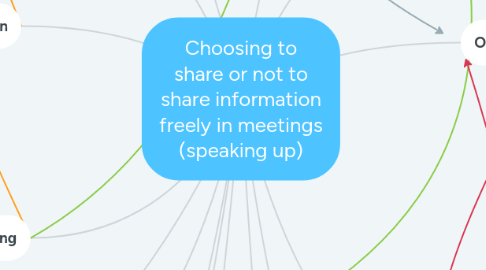
1. Psychological Safety
1.1. Trust
1.2. Vulnerability
1.3. Inclusion
1.4. Accountability
1.5. Productive Conflict
2. Empathy
3. Inclusion
3.1. Peer learning
3.2. Perceived Differentiators
3.2.1. SEC
3.2.2. Race
3.2.3. Ethnicity
3.2.4. In group
3.2.5. Out group
4. Humanizing
4.1. Connected
4.2. Move from I-It to I-Thou
4.3. Removes hierarchical barriers
4.4. Learner well-being
4.5. Humane, Kind, Gentle
5. Sense Making/Meaning Making
5.1. giving meaning to new developments
5.2. interpretation
5.3. felt emotion
5.4. action orientation
5.5. generative
6. Mindfulness
6.1. Self awareness
6.2. Other awareness
6.3. Self regulation
7. Environment
7.1. Physical
7.1.1. Indoor
7.1.2. Nature Incorporated
7.2. Emotional
7.3. Attunement to
8. Belonging
8.1. Basic Human Need
8.2. Feeling of
9. Learner
9.1. Primary Ed
9.2. Secondary Ed
9.3. Adult
10. Instructor
10.1. Teacher
10.2. Facilitator
10.3. Host
11. Storytelling
11.1. Individual Narratives
11.1.1. beliefs
11.1.2. values
11.2. Shared Narratives
11.2.1. Understanding
11.2.2. Empathy
11.2.3. Feeling of being seen
11.2.4. Feeling of being heard
12. Trust
12.1. Feeling of
13. Outcomes
13.1. Innovation
13.2. Knowledge Creation
13.3. Knowledge Sharing
13.4. Creativity
13.5. Collaboration
14. New Shared Meanings
14.1. Co-creation of narratives
14.2. Multi-platform
14.2.1. digital
14.2.2. written
14.2.3. oral
14.2.4. unspoken
15. `Shared Purpose
15.1. Show up authentically
15.2. Be our best
15.3. Plug into the world
15.4. I know why I am here and help you
16. Shared Success
16.1. Supportive learning environment
16.2. Minimize competition around grading achievement
16.3. Among learners
17. Mutual Success
17.1. Learners
17.2. Teachers
17.3. Facilitators
17.4. Host
18. Pedagogy
18.1. Learning
18.2. knowledge sharing across peers
18.3. knowledge creation through questioning
19. Equitable Learning
19.1. Holistic Learning Approach
19.1.1. Education to meet the needs of learner
19.2. Holistic Learning Assessment
19.2.1. Understanding of interests and aptitudes of learner
19.3. Opportunities
19.3.1. Fair
19.3.2. Just
19.3.3. Equal