


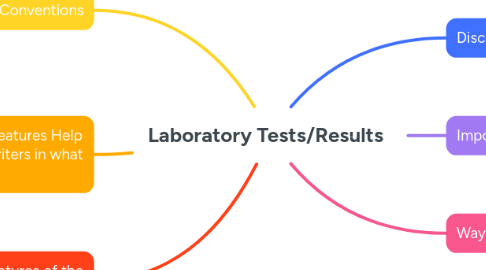
1. Conventions
1.1. The most common content may include blood glucose, electrolytes, enzymes, hormones, lipids (fats), other metabolic substances, and proteins.
1.1.1. Structured in most electronic health record (EHR) systems. Could also in unstructured clinical notes.
1.1.1.1. It is designed to be straight to the point and able to easily read specific parts that are of importance.
1.1.1.1.1. Language of medical terminology and uncommon vocabulary.
2. What The Genre Features Help Readers and/or Writers in what Doctors do
2.1. Uses lab tests to diagnose, screen, and, monitors conditions.
2.1.1. Allows the community to plan or evaluate treatment.
2.1.1.1. Research and educate the community to understand the pathophysiology of a particular disease process.
3. Actions Certain Features of the Genre Constrain
3.1. Doctors have to think of the most rational test for patients and make sure they're choosing the best one.
3.1.1. Need good decision-making strategies to eliminate certain laboratory tests because of cost.
3.1.1.1. On the patient side, they have to follow a doctor's instructions on preparing for a laboratory test. If they don't follow them, it can affect the results of the test.
4. Discourse Community of Doctors
4.1. Use the genre to communicate with their patients.
4.1.1. Focus on each patient to know what test fits best for them.
4.1.1.1. The community wants to keep improving patient care and tests help them achieve that.
4.1.1.1.1. Continues to educate the community.
5. Importance of Genre
5.1. Guide doctors come to a diagnosis.
5.1.1. Results let doctors know what is happening and they will know what proper treatment to do.
5.1.1.1. Monitor diseases and illneses.
5.1.1.1.1. Early detection.
6. Ways of Thinking
6.1. The community has medical decision-making strategies to decide the most rational test for a patient.
6.1.1. Take a more curious and flexible approach toward any general scheme of constraints.
6.1.1.1. Analytical, rational, creative, solution-oriented, and critical thinkers.