


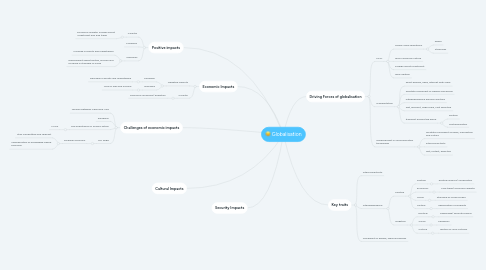
1. Positive impacts
1.1. Country
1.1.1. Economic growth: Foreign Direct Investment and free trade
1.2. Company
1.3. Individual
1.3.1. Increase in profits and marketshare
1.3.2. Employment opportunities, income and increase in standard of living
2. Economic Impacts
2.1. Negative impacts
2.1.1. Company
2.1.1.1. Decrease in profits and marketshare
2.1.2. Individual
2.1.2.1. Loss of jobs and income
2.2. Country
2.2.1. Economic recession/ downturn
3. Cultural Impacts
4. Security Impacts
5. Challenges of economic impacts
5.1. Tension between China and USA
5.2. Pandemic
5.3. The importance of SMART nation
5.3.1. VUCA
5.4. NO SEED
5.4.1. Diversify economy
5.4.1.1. Stay competitive and relevant
5.4.1.2. Specialisation of knowledge-based economy
6. Driving Forces of globalisation
6.1. MNC
6.1.1. Global-scale operations
6.1.1.1. Apple
6.1.1.2. Starbucks
6.1.2. drive consumer culture
6.1.3. Foreign direct investment
6.1.4. jobs creation
6.2. Transportation
6.2.1. smart phones, apps, internet optic fibre
6.2.2. facilitate movement of people and goods
6.2.3. interdependence among countries
6.2.4. fast, efficient, large scale, cost effective
6.2.5. transport around the world
6.2.5.1. aviation
6.2.5.2. containerisation
6.3. Advancement in communication technology
6.3.1. facilitate movement of ideas, information and culture
6.3.2. interconnectivity
6.3.3. fast, instant, effective
7. Key traits
7.1. Interconnectivity
7.2. Interdependence
7.2.1. Positive
7.2.1.1. Political
7.2.1.1.1. political alliance/ cooperation
7.2.1.2. Economic
7.2.1.2.1. Free trade/ economic grwoth
7.2.1.3. Social
7.2.1.3.1. Standard of living increas
7.2.1.4. Culture
7.2.1.4.1. appreciation of diversity
7.2.2. Negative
7.2.2.1. political
7.2.2.1.1. Espionage/ security breach
7.2.2.2. Social
7.2.2.2.1. Pandemic
7.2.2.3. Culture
7.2.2.3.1. dilution of local cultures