
Neuro Linguistic Programming (NLP)

Explore an engaging mindmap detailing Grinder and Bandlers Neuro Linguistic Programming (NLP) Filtering Theory. The mindmap delves deep into the principles of NLP such as communication, modeling, and strategy selection. It also illustrates the NLP filtering process including inputs like sensory channels, the role of state (mood) and Meta-program (habitual pattern), as well as three different filters- deletion, distortion and generalization. Furthermore, it highlights the practical application...

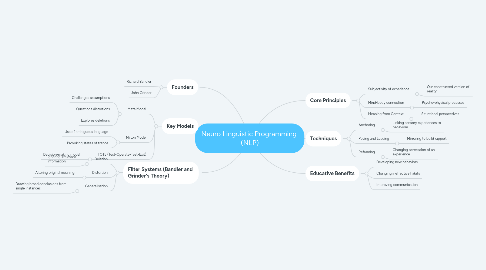
1. Founders
1.1. Richard Bandler
1.2. John Grinder
2. Key Models
2.1. Meta Model
2.1.1. Challenges assumptions
2.1.2. Questions distortions
2.1.3. Explores deletions
2.2. Milton Model
2.2.1. Use of ambiguous language
2.2.2. Provoking states of trance
2.3. TOTE (Test-Operate-Test-Exit)
2.3.1. Decision-making model
3. Filter Systems (Bandler and Grinder's Theory)
3.1. Deletion
3.1.1. Ignoring irrelevant information
3.2. Distortion
3.2.1. Altering original meaning
3.3. Generalisation
3.3.1. Drawing broad conclusions from single instances
4. Core Principles
4.1. Subjectivity of experience
4.1.1. Our constructed version of reality
4.2. Mind-body connection
4.2.1. Psycho-physical processes
4.3. Meaning from Context
4.3.1. Situational perspectives
5. Techniques
5.1. Anchoring
5.1.1. Linking sensory experiences to behaviour
5.2. Pacing and Leading
5.2.1. Mirroring to build rapport
5.3. Reframing
5.3.1. Changing perception of an experience