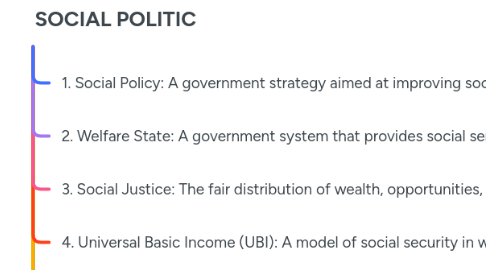
1. 1. Social Policy: A government strategy aimed at improving social welfare and addressing social issues.
2. 2. Welfare State: A government system that provides social services and financial support to its citizens.
3. 3. Social Justice: The fair distribution of wealth, opportunities, and privileges within a society.
4. 4. Universal Basic Income (UBI): A model of social security in which all citizens receive a regular, unconditional sum of money from the government.
5. 5. Social Security: A government program that provides financial assistance to individuals in need, particularly the elderly, disabled, and unemployed.
6. 6. Public Health Policy: Strategies and actions taken by the government to promote health and prevent disease in the population.
7. 7. Affordable Housing: Housing that is reasonably priced for individuals and families with low to moderate incomes.
8. 8. Poverty Alleviation: Initiatives aimed at reducing the level of poverty in a community or country.
9. 9. Child Welfare: A field of social policy focused on the well-being and protection of children.
10. 10. Gender Equality: The state of equal access to resources and opportunities regardless of gender.
11. 11. Social Inclusion: Efforts to ensure that all individuals have the opportunity to participate fully in society.
12. 12. Non-Governmental Organization (NGO): A non-profit organization that operates independently of government, often addressing social issues.
13. 13. Community Development: A process where community members come together to take collective action and generate solutions to common problems.
14. 14. Labor Rights: Legal rights and protections for workers, including fair wages and safe working conditions.
15. 14. Labor Rights: Legal rights and protections for workers, including fair wages and safe working conditions.
16. 15. Healthcare Access: The ability of individuals to obtain necessary medical services.