


Psychological contract and organizational commitment
por Angela Rodríguez Justicia
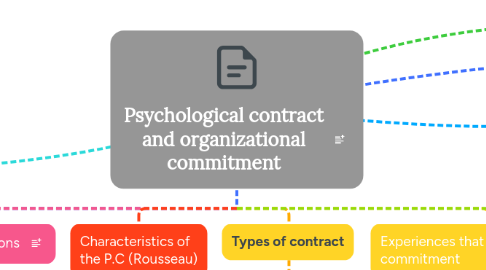
1. 4 types of psychological contracts transactional, transitional, relational and balanced Breach (cognitive) vs. violation (emotional) 3 types of commitment affective, normative and continuance Contract breach affects the employees’ level of organizational commitmen
2. Post violation Model
2.1. 4 ends states after a contract breach
2.1.1. Thriving
2.1.2. Reactivation
2.1.3. Impairment
2.1.4. Dissolution
2.2. Theoretical frameworks
2.3. why that consequences?
2.3.1. 1. Brach implies unmet expectations → unmet expectations are known to affect job satisfaction and performance 2. Breach decrease trust → trust affects outcomes 3. When the organization fails to deliver on their side of the deal, perceived inequity follows as a result
3. Breaches and violations
3.1. Contract breaches
3.1.1. COGNITIVE FOCUS
3.2. 69%
3.2.1. Antecedents
3.2.2. Response to breaches
3.3. Contract violations
3.3.1. AFFECTIVE REACTIONS
4. Characteristics of the P.C (Rousseau)
4.1. 1. Subjective beliefs
4.2. 2. Implicit and explicit promises
4.3. 3. Perceived agreement
4.4. 4. Mutual obligations – an exchange relationship, conditional promises
4.5. 5. Dynamic and changing
4.6. 6. Vulnerable, possible loss of trust
5. Types of contract
5.1. Specified
5.1.1. Transactional (new deal)
5.1.1.1. Balanced (Trasaccional + Relational)
5.2. o
5.2.1. Short term
5.2.1.1. Long term
5.3. Unspecified
5.3.1. Transitional
5.3.1.1. Relational (old deal)
6. Experiences that can influence commitment
7. Organizational Commitment
7.1. Affective
7.2. Continuance
7.2.1. Measuring organizational commitment