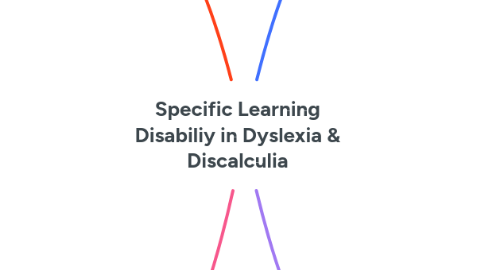
Specific Learning Disabiliy in Dyslexia & Discalculiapor Elle Potts
1. Cognitive Effects: Dyslexia affects cognitive processes related to reading, such as phonological awareness, decoding, and working memory, making reading and writing tasks more difficult. Dyscalculia impacts number sense, mathematical reasoning, and memory for math facts, leading to challenges with calculations and problem-solving. Both can affect processing speed and academic confidence.
1.1. Looks like: Students with dyslexia often have difficulty processing phonological information, which can look like slow or inaccurate reading. Those with dyscalculia struggle with number sense and math reasoning, which may look like trouble remembering math facts or following steps in calculations.
1.2. Sounds like: Students with dyslexia may sound like frequent misreading or guessing words. Students with dyscalulia may sound confused when explaining math problems.
1.3. Accommodation: A research-based accommodation focusing on cognitive effects is breaking tasks into smaller, manageable steps with frequent check-ins (Kelly, n.d.). This supports cognitive processing by reducing overload and improving focus, aids linguistic understanding by clarifying instructions and expectations, lessens emotional frustration by providing achievable goals that build confidence, and encourages positive social interactions through structured peer collaboration. This strategy helps students with dyslexia and dyscalculia succeed in an inclusive classroom by addressing multiple challenges simultaneously.
2. Social Effects: Students with dyslexia or dyscalculia may experience frustration, low self-esteem, or embarrassment when they struggle with tasks their peers find easier. These challenges can lead to social withdrawal, anxiety, or reluctance to participate in class. Over time, this may affect their confidence and peer relationships.
2.1. Looks like: Students with dyslexia and dyscalculia may experience social challenges such as avoiding group activities or feeling isolated, which can look like reluctance to participate.
2.2. Sounds like: This may sound like statements such as, “I don’t want to try because I’m afraid of messing up.” These feelings can affect their confidence and peer interactions.
2.3. Accommodation: A research-based accommodation focusing on social effects is implementing structured peer-assisted learning, where students work in pairs or small groups with guided support. This approach enhances cognitive skills through collaborative problem-solving, supports linguistic development by encouraging discussion and language use, reduces emotional challenges by fostering a sense of belonging and confidence, and directly improves social skills through positive peer interactions. Together, it creates an inclusive environment that addresses the diverse needs of students with dyslexia and dyscalculia. (LD OnLine | All about Learning Disabilities and ADHD, 2024).
3. Linguistic Effects: Dyslexia can significantly impact linguistic skills, including vocabulary development, spelling, reading fluency, and the ability to understand and express language. Students may struggle with word retrieval, sentence structure, and oral or written communication. While dyscalculia primarily affects math, it can also interfere with understanding math-related language, such as word problems or mathematical terminology.
3.1. Looks like: Students with dyslexia often have difficulties with phonological awareness, decoding, spelling, and vocabulary—resulting in mispronunciations, hesitations when speaking or reading aloud, or statements like “I don’t know how to spell that.”
3.2. Sounds like: Those with dyscalculia may struggle with math-related language and word problems, frequently asking, “What does this question even mean?”.
3.3. Accommodation: A research-based accommodation focusing on linguistic effects is explicit vocabulary instruction combined with visual supports, such as graphic organizers. This approach strengthens cognitive skills by helping students organize and process information, improves linguistic abilities through clear, targeted language teaching, reduces emotional frustration by making concepts more understandable, and supports social engagement by enabling clearer communication and participation in group activities. This creates a more accessible and inclusive learning environment for students with dyslexia and dyscalculia (Dyslexia and Related Conditions, n.d.).
4. Emotional Effects: Students with dyslexia and dyscalculia may experience frustration, anxiety, or feelings of inadequacy due to repeated academic struggles. These emotional challenges can lead to low self-esteem and a fear of failure, especially in reading or math-related tasks. Over time, this may impact their overall motivation and attitude toward learning.
4.1. Looks like: Emotionally, this can look like anxiety during reading or math tasks and a reluctance to participate for students with dyslexia and dyscalculia.
4.2. Sounds like: Students with dyslexia and dyscalculia may show signs of frustration, avoidance, or self-doubt, often saying things like “I’m just not good at this” or “I’ll never get it right.”
4.3. Accommodation: A research-based accommodation focusing on emotional effects is implementing a growth mindset approach, which encourages students to view challenges as opportunities to learn rather than failures (Stanford University, 2024). This supports cognitive development by promoting persistence in problem-solving, enhances linguistic skills through positive self-talk and reflective discussions, reduces emotional distress by building resilience and self-confidence, and improves social interactions by fostering a supportive classroom culture that values effort and collaboration. Together, this approach helps students with dyslexia and dyscalculia thrive emotionally and academically in an inclusive setting.