


Computational Thinking for Governance Analytics (4th Session)
por Profesor Magallanes
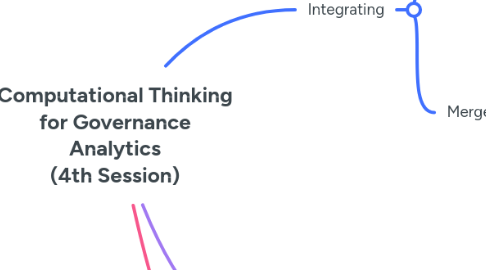
1. Integrating
1.1. Concatenate
1.1.1. Condition 1: All DFs share the same column names.
1.1.2. Condition 2: All the DFs columns are in the same location.
1.1.3. Condition 3: All the DFs columns have the same data types.
1.2. Merge
1.2.1. Key
1.2.1.1. DFs to be merged must share common column values in one or several columns
1.2.2. Default result
1.2.2.1. only rows whose keys are mutual in both DFs
1.2.2.2. you can request rows whose keys do not atch
1.2.3. Fuzzy Merge
1.2.3.1. Algorithm to match similar keys
2. Reshaping
2.1. Wide to Long
2.1.1. you avoid missing cells
2.1.2. easier for complex plots and some longitudinal methods
2.2. Long to Wide
2.2.1. easier to compute stats for unit of analysis
2.3. These processes help discover issues
2.3.1. key repetitions
2.3.2. key mistypying