

CHAPTER4. DEVELOPING THE HOSPITALITY CULTURE: EVERYONE SERVES
Dương Lan Anhにより
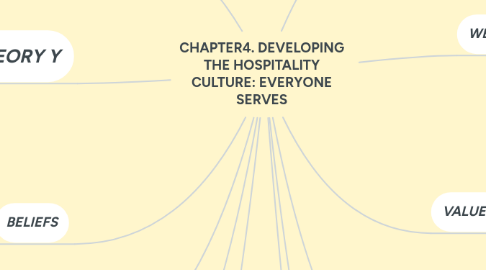
1. THEORY X
1.1. People inherently dislike work
1.2. People must be coerced or controlled to do work to achieve objectives
1.3. People prefer to be directed
2. THEORY Y
2.1. People view work as being as natural as play and rest
2.2. People will exercise self-direction and control towards achieving objectives they are commited to
2.3. People learn to accept and seek reponsibility
3. BELIEFS
3.1. Form ideological core of the culture
3.1.1. Fundamental assumptions (levels of organizational culture
4. NORMS
4.1. Standards of behavior how people are expected to act in the organization
4.1.1. eg.norm of apperance, folways, etc.
5. ORGANIZATION'S LEADER
5.1. Persons with managerial and personal power who can influence others to perform actions beyond those that could be dictated by those person's formal(position) authority alone
5.2. Define the culture (or redefine if necessary), teach it and sustain it
5.3. Role models for the whole organization
5.4. The utimate definers of each organization's cultural value
6. SERVICE EXCELLENCE CULTURE
6.1. Focuses on serving and satisfying the customer
6.1.1. supported and system, training programs, amd measure of achievement
7. STRONG CULTURE
7.1. It directs behavior- provides employee guidance in uncertain situation
7.2. It give employees a sense of purpose and makes them feel good about their company - employees know what their company is trying to achieve and how they are helping the company achieve the goal everyone's clear
8. WEAK CULTURE
8.1. Few or n common values and norms
8.2. Emloyees are often bounded by policies ( even these may make no sense)
8.3. No established values-> employees do not know how the company wants them to act, and they spend time trying to figure out how to behave
8.4. Everyone's confused
9. VALUES
9.1. Preferences for certain behavior or outcmes over others
9.1.1. right and wrong
9.1.2. desirable and undersirable behavior (levels of organizational culture)