


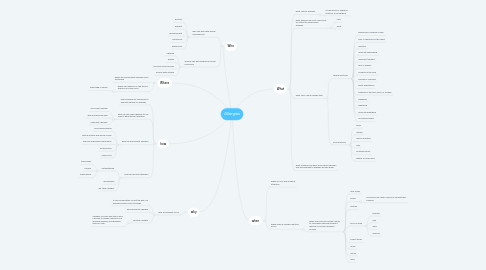
1. Who
1.1. who can help with allergy management
1.1.1. doctors
1.1.2. allergist
1.1.3. dermatologist
1.1.4. nutritionist
1.1.5. pharmacist
1.2. Anyone can get allergies but more commonly
1.2.1. Children
1.2.2. Elderly
1.2.3. immune compromised
1.2.4. people with asthma
2. Where
2.1. where are people with allergies more vulnerable
2.2. where can depend on the type of allergy you suffer from
2.2.1. areas high in pollen
3. how
3.1. how available are resources to educate people on allergies
3.2. how can we make changes to our lives to help prevent allergies
3.2.1. avoid your allergen
3.2.2. seek professional help
3.2.3. make diet changes
3.3. how can we prevent allergies
3.3.1. home dehumidifier
3.3.2. special matres and pillow covers
3.3.3. take any prescribed medication
3.3.4. acupuncture
3.3.5. saline rinse
3.4. how can we treat allergies
3.4.1. Antihistamine
3.4.1.1. nasal spray
3.4.1.2. creams
3.4.1.3. medications
3.4.2. epinephrine
3.4.3. life style changes
4. why
4.1. why do allergies occur
4.1.1. it can be hereditary or just the way our personal bodies react to things
4.1.2. environmental changes
4.1.3. lifestyle changes
4.1.3.1. changes to every day items used can lead to allergic reactions e.g washing powder, dish washing liquid or soap
5. What
5.1. what causes allergies
5.1.1. an abnormal or negative reaction to something
5.2. what animals are most commonly an irritant to people with allergies
5.2.1. cats
5.2.2. dogs
5.3. what form can an allergy take
5.3.1. severe reactions
5.3.1.1. abdominal cramping or pain
5.3.1.2. pain or tightness in the chest
5.3.1.3. diarrhea
5.3.1.4. difficulty swallowing
5.3.1.5. dizziness (vertigo)
5.3.1.6. fear or anxiety
5.3.1.7. flushing of the face
5.3.1.8. nausea or vomiting
5.3.1.9. heart palpitations
5.3.1.10. swelling of the face, eyes, or tongue
5.3.1.11. weakness
5.3.1.12. wheezing
5.3.1.13. difficulty breathing
5.3.1.14. unconsciousness
5.3.2. mild reactions
5.3.2.1. hives
5.3.2.2. itching
5.3.2.3. nasal conjestion
5.3.2.4. rash
5.3.2.5. scratchy throat
5.3.2.6. watery or itchy eyes
5.4. what research has been done about children and the changes to allergies as they grow
6. when
6.1. when do you seek medical attention
6.2. when does an allergic reaction occur
6.2.1. when your immune system reacts to something causing different reactions common allergies include
6.2.1.1. dust mites
6.2.1.2. pollen
6.2.1.2.1. commonly hay fever is worst in spring/early summer
6.2.1.3. animals
6.2.1.4. food or drink
6.2.1.4.1. peanuts
6.2.1.4.2. egg
6.2.1.4.3. dairy
6.2.1.4.4. seafood
6.2.1.5. insect stings
6.2.1.6. drugs
6.2.1.7. mould
6.2.1.8. latex