

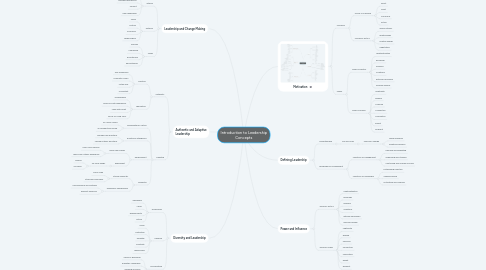
1. Leadership and Change Making
1.1. Internal
1.1.1. Low Preformance
1.1.2. Individual Resistance
1.1.3. Conflict
1.1.4. New Leadership
1.2. External
1.2.1. Social
1.2.2. Cultural
1.2.3. Economic
1.2.4. Technological
1.3. Types
1.3.1. Planned
1.3.2. Unplanned
1.3.3. Evolutionary
1.3.4. Revolutionary
2. Authentic and Adaptive Leadership
2.1. Authentic
2.1.1. Practical
2.1.1.1. Self-Awareness
2.1.1.2. Lead With Vision
2.1.1.3. Listen Well
2.1.1.4. Consistant
2.1.2. Theoretical
2.1.2.1. Transparency
2.1.2.2. Draw On Past Experiences
2.1.2.3. Lead With Heart
2.1.2.4. Focus On Long Term
2.2. Adaptive
2.2.1. Organizational Justice
2.2.1.1. All Voices Heard
2.2.1.2. All Perspectives Heard
2.2.2. Emotional Intelligence
2.2.2.1. Manage Own Emotions
2.2.2.2. Manage Others' Emotions
2.2.3. Development
2.2.3.1. Learn New Things
2.2.3.1.1. Learn From Failures
2.2.3.1.2. Learn From Others Experience
2.2.3.2. Experiment
2.2.3.2.1. Try New Things
2.2.4. Character
2.2.4.1. Strong Character
2.2.4.1.1. Moral Code
2.2.4.1.2. Ethics and Principles
2.2.4.2. Workplace Transparency
2.2.4.2.1. Hold Everyone Accountable
2.2.4.2.2. Respect Everyone
3. Diversity and Leadership
3.1. Dimensions
3.1.1. Awareness
3.1.2. Vision
3.1.3. Responcibility
3.1.4. Action
3.2. Defining
3.2.1. Vision
3.2.2. Motivation
3.2.3. Empathy
3.2.4. Creativity
3.2.5. Taking Risks
3.3. Incorporating
3.3.1. Sense of Belonging
3.3.2. Empathic Leadership
3.3.3. Ongoing Inclusion
3.3.4. Consider Brand
4. Motivation
4.1. Influence
4.1.1. Forms of Influence
4.1.1.1. Direct
4.1.1.2. Overt
4.1.1.3. Conscious
4.1.1.4. Active
4.1.2. Influence Tactics
4.1.2.1. Involve Others
4.1.2.2. Realtionships
4.1.2.3. Positive Energy
4.1.2.4. Negotiation
4.2. Power
4.2.1. Types of Tactics
4.2.1.1. Legitimatization
4.2.1.2. Exchange
4.2.1.3. Pressure
4.2.1.4. Coalitions
4.2.1.5. Rational Persuasion
4.2.1.6. Personal Appeal
4.2.2. Types of Power
4.2.2.1. Legitimate
4.2.2.2. Reward
4.2.2.3. Coercive
4.2.2.4. Connection
4.2.2.5. Information
4.2.2.6. Expert
4.2.2.7. Referent
5. Defining Leadership
5.1. Understanding
5.1.1. Cry and Crisis
5.1.1.1. Need For Change
5.1.1.1.1. Tough Problems
5.1.1.1.2. Adaptive Problems
5.2. Leadership vs Management
5.2.1. Functions of Management
5.2.1.1. Planning and Budgeting
5.2.1.2. Organizing and Staffing
5.2.1.3. Controlling and Problem Solving
5.2.2. Functions of Leadership
5.2.2.1. Establishing Direction
5.2.2.2. Aligning People
5.2.2.3. Motivating and Inspiring
6. Power and Influence
6.1. Types of Tactics
6.1.1. Legitimatization
6.1.2. Exchnage
6.1.3. Pressure
6.1.4. Coalitions
6.1.5. Rational Persuasion
6.1.6. Personal Appeal
6.2. Types of Power
6.2.1. Legitimate
6.2.2. Reward
6.2.3. Coercive
6.2.4. Connection
6.2.5. Information
6.2.6. Expert
6.2.7. Referent