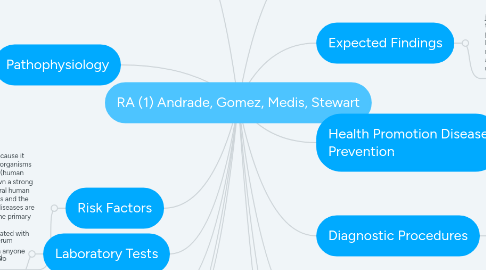
RA (1) Andrade, Gomez, Medis, Stewart
Hallie S Castroにより
1. Complications
1.1. Respiratory Complications: Pleurisy, pneumonitis, diffuse interstitial fibrosis, and pulmonary hypertension
1.2. osteoporosis, severe fatigue, anemia, weight loss, subcutaneous nodules, peripheral neuropathy, vasculitis, pericarditis, fibrotic lung disease, Sjogren’s syndrome, kidney disease, Felty’s syndrome, Joint deformities, increased joint swelling and tenderness, moderate-to-severe weight loss, fever, and extreme fatigue
2. Pathophysiology
2.1. A chronic, progressive, systemic inflammatory autoimmune disease process that affects primarily the synovial joints. In RA transformed autoantibodies are formed that attack healthy tissue, especially synovium, causing inflammation. The disease then begins to involve the articular cartilage, joint capsule, and surrounding ligaments and tendons. Immunity and inflammatory factors cause cartilage damage
3. Risk Factors
3.1. female reproductive hormones because it mainly affects women, infectious organisms particularly the Epstein Barr Virus (human herpes virus 4); research has shown a strong association between RA and several human leukocyte antigen (HLA)-DR alleles and the cause is unknown but most HLA diseases are autoimmune; DR4 and DRB1 are the primary genetic factors that contribute to development of RA; DR4 is associated with more severe forms of the disease; euro-Americans have it more than anyone else and we don’t know why
4. Laboratory Tests
4.1. Rheumatoid factor, ANA (total), Serum complement, ESR, SPEP, Albumin, Globulin: Alpha 1, Alpha 2, Beta, and Gamma, and HLA
5. Nursing Care
5.1. Pain management and fatigue, reduce inflammation, improve mobility and sense of well-being, self-care deficit, disturbed body image, ineffective coping, provide comfort with drugs
6. Client Education
6.1. Balance activity with rest. Take one or two naps each day. Pace yourself; do not plan too much for one day. Set priorities. Determine which activities are most important and do them first. Delegate responsibilities and tasks to your family and friends. Plan ahead to prevent last-minute rushing and stress. Learn your own activity tolerance and do not exceed it. Structural changes may be necessary if there are deficits in performing ADLs or MOBILITY. Doors must be wide enough to accommodate a wheelchair or walker if one is used. Many people have signs and symptoms of joint inflammation but do not seek medical attention. Teach them to seek professional health care to reduce pain and prevent disability. Assess coping strategies
7. Interprofessional Care
7.1. physician, nurse, OT, PT, rheumatologist
8. Medications
8.1. NSAIDS, corticosteroids, DMARDS (leflunomide, methotrexate), Biological response modifiers (enbrel, remicade), Jak kinase inhibitors (tofacitinib), antimalarials. Acetaminophen, steroids
9. Expected Findings
9.1. joint inflammation, joint deformities, tender and swollen joints, symmetrical pattern of affected joints, pain and stiffness lasting longer than 30 minutes in the morning, fever, weight loss, fatigue, anemia, raynaud's, enlarged lymph nodes, ulnar deviation
10. Health Promotion Disease Prevention
10.1. Disease has a genetic component, therefore it is not preventable. Smoking cessation can help prevent inflammation that is associated with RA.
11. Diagnostic Procedures
11.1. Xrays, CT, arthocentesis
12. Medications
13. Therapeutic Procedures
13.1. Rest/ energy conservation. Ice for hot joints. Heat/warmth for stiff joints. Plasmapheresis.
14. Safety Considerations
14.1. medications can cause immunosuppression to teach to stay away from sick people and large crowds, teach to take care of the skin by staying out the sun, using sunscreen

