

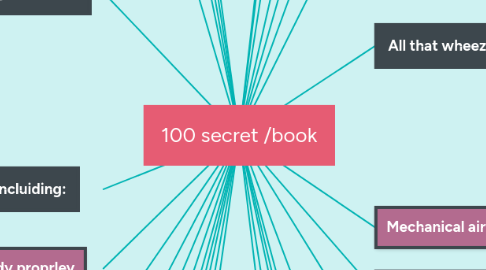
100 secret /book
Hassan Alhjeemeにより
1. Ketamine best inducation agent for patients with :
1.1. elevated intracranial pressure [ICP]
1.2. hypovolemic trauma
1.3. acrive bronchospastic disease
2. Local anesthetic agents :
2.1. Esters
2.2. Amides
3. Adequate oxygenation
3.1. Controlled Postperative pain
3.2. Resolved postperative nausea and vomiting
3.3. Required for postanesthesia unit discharge
4. PONV: postperative nausea and vomiting
5. The shoulder primarily supplied by:
5.1. Superiorly : suprascapular nerve
5.2. Both can anesthetize by interscalene block and it's first complications is ipsilateral phrenic nerve block result in:
5.2.1. Hemidiaphragmatic paralysis
5.2.2. Horner syndrome
5.2.3. unilateral recurrent laryngeal nerve paralysis
5.2.4. Pneumothorax \ air in pleural cavity ,chest cavity
5.2.5. inadvertent neuraxial injection\الحقن العصبي غير المقصود
5.2.6. Accidental intravascular injection
5.3. Inferiorly : axillary nerve
6. Age-related physiological changes include:
6.1. Left ventricular hypertrophy
6.2. Increased reliance on preload for cardiac output
6.3. Decreased venous compliance
6.4. Increased closing capacity
6.5. Decreased glomerular filtration rate
6.6. Decreased hepatic function
6.7. Increased risk for postoperative delirium
7. Patients with reactive airway disease [ex: asthma] require through preoperative preparation incluiding:
7.1. Inhaled β-agonist therapy
7.2. Possibly steroids
8. Congestive failure:heart not able to pump blood around body proprley
9. Aspiration : to draw in or out using a sucking motion
10. Pneumothorax : when the lung collapsed due to air entering the pleural space
11. ROTEM: rotational thromboelastometry
12. The best practice to ensure termination of the relaxant effect from neuromuscular blocking agents are:
12.1. Dose them sparingly
12.2. Allow enough time for normal metabolism to occur
13. If for some reason a patient is not recovering from neuromuscular blockade , they should remain intubated on supported ventilation until they can demonstrate return of strength
14. Nonanion gap metabolic acidosis: hyperchloremia/ eleoctrolyte impalance occurs when there's to kuch blood chloride in the blood
15. Patients who receive high volumes fluid , especially normal saline , often develop hyperchloremia and a nonanion gap metabolic acidosis
16. Nitrous oxide should not be used in:
16.1. Setting of pneumothorax
16.2. Bowel obstruction
16.3. Pneumocephalus
16.4. During middle ear or opthalmological surgeryl / eye surgery
17. Hypoxemia / low oxygen level in blood/ causes :
17.1. Low inspired oxygen
17.2. Alveolar hypoventilation
17.3. V/Q mismatch
17.4. Right-left shunt
17.5. Impaired oxygen diffusion
18. The newborn heart less complaint cause it's less mature \ less responsive to inotropic support \ myocardial mature complete 6-12 months age
19. Propfol uses:
19.1. Adult patients with docomunted egg allergies
19.2. Should avoided in children with anaphylaxis to egg
20. Local anesthetic
20.1. Inuced
20.1.1. CNS toxicity
20.1.1.1. Manifests with excitation
20.1.1.2. Seizures
20.1.1.3. Loss of conscious
20.1.2. Cardiac toxicity
20.1.2.1. Happens after CNS toxicity
20.1.2.2. Hypotension
20.1.2.3. Conduction blockade
20.1.2.4. Dysrhythmias
20.1.2.5. Cardiac arrest