
The Development and Evolution of Language: Language Birth, Language Growth, and Language Death

Chapter 6

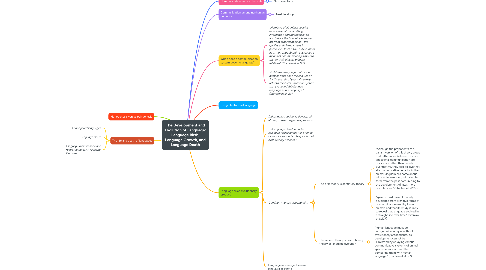
1. Monogenesis versus polygenesis
2. The life and death of languages
2.1. Endangered languages
2.2. Language death
2.3. Language maintenance and reinforcement: An Arapaho Example
3. Communication and its channels
3.1. Next level topic
4. Communication among nonhuman primates
4.1. Next level topic
5. When does a communication system become language?
5.1. "Members of all animal species have a way of transmitting information among themselves, and before the hominids branched off from other hominoids - the gorillas and chimpanzees in particular - from 5 to 8 million years ago, they undoubtedly possessed a means of communicating similar to that of their closest primate relatives" (Stanlaw et al.122)
5.2. "Full-blown language that modern humans have been making use of for thousands of years, One may refer to the communication system that preceded full-fledged language as pre-language." (Stanlaw et al.123)
6. Design features of language
7. Language as an evolutionary product
7.1. Did language suddenly develop all at one, or was it a gradual process?
7.2. Did language develop under selective forces directly all at once, or was it a secondary by-product of evolutionary process?
7.3. Continuity versus discontinuity
7.3.1. The first theory is continuity theory
7.3.1.1. "Although the proponents of a variant version of this theory argue that differences between human and animal communication are qualitative rather than merely quantitative, they also believe that all communicative behavior in the animal kingdom has come about without interruption, with simpler form from the past contributing to the development of later, more complex one." (Stanlaw et al.127)
7.3.1.2. "speech must have ultimately developed from primitive forms of communication used by lower animals and that its study is likely to reveal that language evolved in a straight line over time." (Stanlaw et al.127)
7.3.2. The second theory is discontinuity theory of language evolution
7.3.2.1. "human language must be recognized as unique, without evolutionary antecedents. Its development cannot be illuminated by studying various communicative systems of animal species at random and then comparing them with human language." (Stanlaw et al.127)