


1. **Pillar 5:** Digital Skills & Values/TA2: Digital Skills, Inclusion & Education
1.1. **MDA:** Ministry of Education
1.1.1. **Policy:** Education Act
1.1.1.1. **Challenge:** Talent under-utilization due to the prevalence of unskilled and non-specialized work among workers with higher skill levels calls for a reevaluation of reskilling and upskilling strategies.
1.1.1.1.1. **Affected Area:** Policy adjustments may be necessary to encourage the adoption of reskilling programs and expand opportunities for workers affected by the digital divide, potentially involving amendments to education and training policies.
1.1.1.2. **Challenge:** Insufficient understanding of the link between market-driven skills development and sustainable digital economy growth calls for a comprehensive policy approach.
1.1.1.2.1. **Affected Area:** There may be a need for policies that incentivize educational institutions to adapt their curricula to meet market demands, alongside broader labor market policies supporting successful transitions from education to employment.
1.1.1.3. **Challenge:** Limited infrastructure and support services for facilitating school-to-work transitions and workforce adaptation to digital technologies hinder the effectiveness of digital education initiatives.
1.1.1.3.1. **Affected Area:** Investment in infrastructure and labor market services may require legislative support to ensure adequate resources are allocated to support digital education programs effectively.
1.1.2. **Policy:** Technical and Vocational Education and Training (TVET) Act
1.1.2.1. **Challenge:** Employers seek candidates with a combination of technical and soft skills, highlighting the importance of on-the-job exposure and mentorship.
1.1.2.1.1. **Affected Area:** Incentives or regulations may be needed to promote apprenticeships, mentorships, and other forms of practical training to bridge the skills gap.
1.2. **MDA:** Ministry of Labour and Social Protection
1.2.1. **Policy:** Employment Act
1.2.1.1. **Challenge:** The mismatch between specialized skills and the tasks performed in microtask and freelance platforms indicates a disconnect between workforce skills and market demands.
1.2.1.1.1. **Affected Area:** There may be a need to review existing labor market regulations to ensure that skill development initiatives align with emerging digital job requirements
1.2.1.2. **Challenge:** The informal nature of online work and the lack of clarity regarding its impact on skills, incomes, and wellbeing pose challenges for digital inclusion efforts.
1.2.1.2.1. **Affected Area:** Regulations addressing the formalization of online work and ensuring worker protections may require refinement to promote inclusivity and address the concerns of the informal workforce.
2. **Pillar 4:** Innovation-Driven Entrepreneurship/TA1: Innovation, Entrepreneurship & Job Creation
2.1. **MDA:** Ministry of Education
2.1.1. **Policy:** Kenya National Qualifications Authority (KNQA) Act
2.1.1.1. **Challenge:** The rapid evolution of digital labor markets requires continuous upskilling and reskilling of workers to remain competitive. However, there is a lack of structured initiatives to support this life-cycle approach to skill development.
2.1.1.1.1. **Affected Area:** The report doesn't specify particular laws, but the gap implies a need for comprehensive policies addressing continuous learning and skills development in alignment with evolving market needs.
2.1.1.2. **Challenge:** While there's an abundance of training programs for digital entrepreneurship, not all are recognized by the ICT industry, leading to confusion among online workers seeking skills development.
2.1.1.2.1. **Affected Area:** There may be a need for regulations or guidelines to standardize and recognize industry-relevant training programs, ensuring quality and alignment with industry demands.
2.2. **MDA:** Ministry of Labour and Social Protection
2.2.1. **Policy:** Employment Act
2.2.1.1. **Challenge:** Absence or complexity of formal dispute resolution mechanisms for online workers facing risks like harassment or fraud.
2.2.1.1.1. **Affected Area:** This gap suggests a need for regulatory frameworks or industry standards that mandate digital platforms to provide accessible and effective dispute resolution mechanisms for online workers.
2.2.1.2. **Challenge:** Online workers, especially those on digital labor platforms, are often not recognized as formal employees, leading to limited rights and protections.
2.2.1.2.1. **Affected Area:** Labor regulations need updating to accommodate the evolving nature of work in the digital economy, ensuring that online workers receive appropriate protections and benefits.
2.3. **MDA:** Data Commissioner's Office (MoICT&DE)
2.3.1. **Policy:** Data Protection Act
2.3.1.1. **Challenge:** Data privacy concerns persist, necessitating stronger data protection frameworks.
2.3.1.1.1. **Affected Area:** Enhancement of data protection regulations and establishment of functional redress mechanisms may be necessary to address privacy concerns and enhance consumer trust.
2.4. **MDA:** National Cybersecurity Centre (NCSC) (MoICT&DE)
2.4.1. **Policy:** Information and Communication Technology (ICT) Policy
2.4.1.1. **Challenge:** Consumer trust in digital platforms, including e-commerce, needs improvement.
2.4.1.1.1. **Affected Area:** Policies promoting transparency, accountability, and cybersecurity in digital platforms may require reinforcement to strengthen consumer trust and safety.
2.5. **MDA:** National Government Coordination Unit (NGCU) (Ministry of Interior)
2.5.1. **Policy:** Public Participation Act
2.5.1.1. **Challenge:** Lack of coherence among labor market regulations, skills development initiatives, and ICT infrastructure expansion, leading to fragmented efforts and potential exacerbation of digital divides.
2.5.1.1.1. **Affected Area:** Coordinating existing initiatives and establishing advisory bodies may require amendments or additions to existing laws to ensure alignment across different sectors.
2.6. **MDA:** Central Bank of Kenya (CBK) (Ministry of Finance)
2.6.1. **Policy:** Banking Act
2.6.1.1. **Challenge:** Access to finance for smaller enterprises, particularly those involved in innovation, is insufficient due to the irregularity of payments from online sources.
2.6.1.1.1. **Affected Area:** Banking regulations and financial policies may need adjustments to accommodate the unique financial needs of digital entrepreneurs, including flexible loan repayment schedules and reduced administrative hurdles.
3. **Pillar 1:** Digital Government/ TA5: Digital Govt., Policies, Laws & Regulations
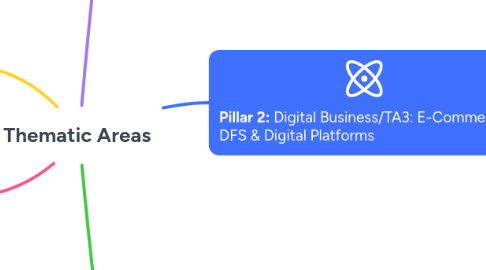
4. **Pillar 2:** Digital Business/TA3: E-Commerce, DFS & Digital Platforms
4.1. **MDA:** Ministry of Investment, Trade, and Industry (MITI)
4.1.1. **Policy:** Kenya Industrial Transformation Program (KITP)
4.1.1.1. **Challenge:** Access to affordable connected devices is limited, hindering widespread participation in e-commerce activities.
4.1.1.1.1. **Affected Area:** There may be a need for policies or incentives to promote local manufacturing of smartphones, tablets, and computers to reduce device costs.
4.1.1.2. **Challenge:** Difficulty in affording modern connected devices hinders wider adoption of AI technologies, exacerbating digital divides.
4.1.1.2.1. **Affected Area:** Policies promoting local manufacturing of connected devices and improving access to finance for start-ups may need enhancement.
4.2. **MDA:** Competition Authority of Kenya (CAK)( MITI)
4.2.1. **Policy:** Consumer Protection Act
4.2.1.1. **Challenge:** Consumer trust in e-commerce platforms is low due to concerns about supplier authenticity and product quality.
4.2.1.1.1. **Affected Area:** Establishment of digital badges or seals, similar to those in other countries, may require regulatory frameworks to ensure authenticity and reliability.
4.3. **MDA:** National Research Fund (NRF) (MoE)
4.3.1. **Policy:** Science, Technology, and Innovation Act
4.3.1.1. **Challenge:** Insufficient investment in research and development (R&D) and innovation in the e-commerce sector.
4.3.1.1.1. **Affected Area:** Policies encouraging R&D and innovation funding in the e-commerce sector may need to be developed or strengthened to foster technological advancements.
4.4. **MDA:** Communications Authority of Kenya (CAK) ( MoICT& DE)
4.4.1. **Policy:** Universal Service Fund (USF) Regulations
4.4.1.1. **Challenge:** Lack of consistent digitalization among the population limits the income-generating potential of e-commerce.
4.4.1.1.1. **Affected Area:** Last-mile connectivity efforts may require legislative support to prioritize infrastructure development in underserved areas to facilitate digitalization.
4.5. **MDA:** Ministry of ICT & Digital Economy
4.5.1. **Policy:** Kenya National Innovation Agency (KENIA) Act
4.5.1.1. **Challenge:** Start-ups face challenges in accessing timely seed capital and market tools, impacting their ability to compete in the market.
4.5.1.1.1. **Affected Area:** Policies supporting start-up financing and market access may need enhancement to ensure a conducive environment for innovation and competition.
4.5.2. **Policy:** Information and Communication Technology (ICT) Policy
4.5.2.1. **Challenge:** Emerging technologies and innovative business models outpace existing regulatory frameworks, posing governance challenges.
4.5.2.1.1. **Affected Area:** Regulatory updates may be needed to accommodate new technologies and business models while ensuring consumer protection and market stability.
4.6. **MDA:** National Government Coordination Unit (NGCU) (Ministry of Interior)
4.6.1. **Policy:** Public Participation Act
4.6.1.1. **Challenge:** Lack of collaboration among stakeholders hampers the success of e-commerce ventures.
4.6.1.1.1. **Affected Area:** Participatory approaches to policy design and investment discussions may necessitate regulatory frameworks promoting stakeholder engagement and cooperation.
4.7. **MDA:** Central Bank of Kenya (CBK) (Ministry of Finance)
4.7.1. **Policy:** National Payment System Regulations
4.7.1.1. **Challenge:** Not everyone in Kenya benefits equally from digital financial inclusion efforts, leading to a digital divide.
4.7.1.1.1. **Affected Area:** Policies promoting equitable access to digital financial services may require adjustments to address disparities among different population segments.
4.8. **MDA:** National Treasury (Ministry of Finance)
4.8.1. **Policy:** Finance Act
4.8.1.1. **Challenge:** Introduction of taxation on digital transactions may hinder digital financial services adoption, particularly among small businesses and consumers.
4.8.1.1.1. **Affected Area:** Taxation policies on digital transactions may need review to ensure they do not disproportionately affect vulnerable groups or impede financial inclusion efforts.
4.9. **MDA:** Public-Private Partnerships Unit (PPPU). (Ministry of Finance)
4.9.1. **Policy:** Public-Private Partnerships Act
4.9.1.1. **Challenge:** High upfront investment and fixed costs deter economic activity in digital platforms.
4.9.1.1.1. **Affected Area:** Public-private partnership frameworks may require adjustments to de-risk new investment opportunities and encourage digital platform development.
5. **Pillar 3:** Infrastructure/TA4: Infrastructure, Inclusion & Access
5.1. **MDA:** Ministry of Education
5.1.1. **Policy:** Kenya National Qualifications Authority (KNQA) Act
5.1.1.1. **Challenge:** Gap between existing policy frameworks and the needs of digital businesses leveraging emerging technologies, including AI.
5.1.1.1.1. **Affected Area:** Digital skills development programs and national training curricula may need adjustment to meet the evolving needs of the digital labor market.
5.2. **MDA:** Data Commissioner's Office. (MoICT&DE)
5.2.1. **Policy:** Data Protection Act/ Consumer Protection Act
5.2.1.1. **Challenge:** Lack of shared guidelines across sectors on compliance around data protection and ethical concerns related to AI.
5.2.1.1.1. **Affected Area:** Regulatory frameworks governing data protection and ethical AI use may require development or revision to establish industry-wide collaboration frameworks.
5.3. **MDA:** National Cybersecurity Centre (NCSC) (MoICT&DE)
5.3.1. **Policy:** Information and Communication Technology (ICT) Policy
5.3.1.1. **Challenge:** Adoption of AI raises cybersecurity concerns, discouraging participation in digitally enabled livelihoods.
5.3.1.1.1. **Affected Area:** Existing cybersecurity frameworks and policies may require enhancement to address new security challenges posed by AI adoption.