
Paint/ Rehab/Reno

This mind map outlines a comprehensive painting project, covering everything from paint types and preparation to tools and application techniques. Here’s a brief summary of each main section: Paint Types: Comparison of finishes (e.g., Satin vs. Eggshell) and a link to Home Depot’s paint selector for guidance. Brands: Focus on the Behr brand, with specific color choices like gray. Primer: Discusses the importance of using a PVA primer, especially for drywall, and avoiding unnecessary primer...

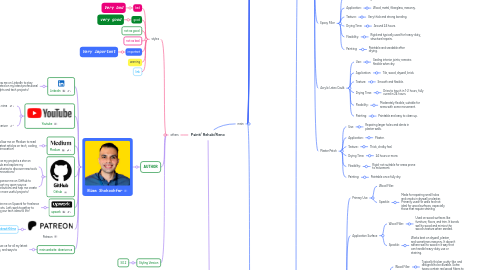
1. others
1.1. styles
1.1.1. bad
1.1.1.1. Very bad
1.1.2. good
1.1.2.1. very good
1.1.3. not as good
1.1.4. not as bad
1.1.5. important
1.1.5.1. Very important
1.1.6. warning
1.1.7. link
1.2. AUTHOR
1.2.1. Nima Shokouhfar
1.2.1.1. Linkedin
1.2.1.1.1. Follow me on LinkedIn to stay updated on my latest professional insights and tech projects!
1.2.1.2. Youtube
1.2.1.2.1. code with nima
1.2.1.2.2. ideariver
1.2.1.3. Medium
1.2.1.3.1. ✍️ Follow me on Medium to read my latest articles on tech, coding, and innovation!
1.2.1.4. Github
1.2.1.4.1. ⭐️ Give my projects a star on GitHub and explore my repositories to discover new tools and innovations!
1.2.1.4.2. 💖 Sponsor me on GitHub to support my open-source contributions and help me create even more useful projects!
1.2.1.5. upwork
1.2.1.5.1. 💼 Hire me on Upwork for freelance projects. Let’s work together to bring your tech ideas to life!
1.2.1.6. Patreon
1.2.1.6.1. https://www.patreon.com/c/CodewithNima
1.2.1.7. main website: ideariver.ca
1.2.1.7.1. 🚀 Visit IdeaRiver.ca for all my latest projects, blogs, and ways to connect!
1.3. Styling Version
1.3.1. 3.0.2
2. main
2.1. paint types
2.1.1. Satin vs EggShell
2.2. use what for what
2.2.1. Importance of Paint Sheen Selection
2.2.1.1. Impact of Sheen on Color Perception
2.2.1.1.1. High gloss reflects light, brightens space, but shows imperfections
2.2.1.1.2. Flat finish is more forgiving of flaws, common for ceilings
2.2.1.2. Recommended Uses for Different Sheens
2.2.1.2.1. High Gloss
2.2.1.2.2. Flat Sheen
2.2.1.2.3. Semi-Gloss
2.2.1.2.4. Eggshell and Satin
2.3. home depot paint selector
2.3.1. https://www.homedepot.ca/paint-selector
2.4. brands
2.4.1. beher
2.4.1.1. gray
2.5. primar
2.5.1. PVA primer
2.5.1.1. all primers are pva
2.5.1.1.1. so don't trap out for primers
2.5.2. it should be a drywall sealer
2.6. WI
2.6.1. Prepare the Room
2.6.1.1. Clear the Area:
2.6.1.1.1. Move furniture out or cover it with drop cloths to protect from paint splatters.
2.6.1.2. Remove Fixtures:
2.6.1.2.1. Take off outlet covers, switch plates, and any wall fixtures.
2.6.1.3. Tape:
2.6.1.3.1. Use painter’s tape to mask off edges, trim, and other areas you don’t want painted.
2.6.2. 2. Prepare the Wall
2.6.2.1. Clean the Surface:
2.6.2.1.1. Wipe down the walls with a damp cloth to remove dust, grease, or grime. For kitchens, a mild degreaser may be needed.
2.6.2.2. Repair Imperfections:
2.6.2.2.1. Fill any holes, cracks, or dents with spackle. Sand the patched areas smooth once dry.
2.6.2.3. Sand the Walls:
2.6.2.3.1. Lightly sand glossy surfaces to ensure the paint adheres well.
2.6.2.4. Prime:
2.6.2.4.1. Use a primer, especially on new drywall or heavily patched areas. Primer improves paint adhesion and gives a uniform finish.
2.6.3. 3. Gather Supplies
2.6.3.1. Paint:
2.6.3.1.1. Use high-quality paint and pick the right finish (matte, eggshell, satin, or semi-gloss).
2.6.3.2. Rollers and Brushes:
2.6.3.2.1. Select the right roller nap for your wall texture and quality brushes for cutting in edges.
2.6.3.3. Tray and Liners:
2.6.3.3.1. Use a paint tray with liners for easy cleanup.
2.6.4. 4. Cut In Edges
2.6.4.1. Use a Quality Brush:
2.6.4.1.1. Start with a 2- to 3-inch angled brush to paint along edges, corners, and around trim.
2.6.4.2. Feather the Paint:
2.6.4.2.1. Feather the brush out to blend seamlessly with the roller-applied paint.
2.6.5. 5. Roll the Paint
2.6.5.1. Load the Roller: Dip the roller into the tray and roll off excess to avoid drips.
2.6.5.2. Roll in a “W” Pattern: Begin in one corner, rolling in a “W” or “M” shape and filling it in without lifting the roller.
2.6.5.3. Blend Sections: Work in small sections and blend while the paint is still wet to avoid visible lines.
2.6.6. 6. Apply a Second Coat (If Needed)
2.6.6.1. Wait for Drying: Let the first coat dry completely before applying a second. This helps achieve an even, durable finish.
2.6.6.2. Repeat: Repeat the cutting in and rolling for a uniform look.
2.6.7. 7. Final Touches
2.6.7.1. Remove Tape Carefully: Pull off the painter’s tape at a 45-degree angle while the paint is still slightly wet to avoid peeling.
2.6.7.2. Inspect: Check for any missed spots and touch up with a brush if needed.
2.6.8. 8. Clean Up
2.6.8.1. Wash Brushes and Rollers: Rinse tools with water (for water-based paint) or mineral spirits (for oil-based).
2.6.8.2. Dispose of Paint Properly: Follow local regulations for disposing of unused paint or save for future touch-ups.
2.7. tut
2.7.1. pre prep
2.7.1.1. remove everything
2.7.1.2. https://www.youtube.com/watch?v=msoKy5-M2X4&ab_channel=HomeRenoVisionDIY
2.7.1.2.1. re
2.7.2. 2
2.7.3. cabinet good
2.7.4. cabinet good
2.7.4.1. the after is nice
2.7.5. mud work
2.7.5.1. https://www.youtube.com/watch?v=Z4sEIDlBLVM&ab_channel=HomeRenoVisionDIY
2.7.5.1.1. recommended muds
2.7.6. patch any kind of holes
2.8. Filling and Sealing Materials
2.8.1. types
2.8.1.1. Joint Compound
2.8.1.1.1. Use:
2.8.1.1.2. Application:
2.8.1.1.3. Texture:
2.8.1.1.4. Drying Time:
2.8.1.1.5. Flexibility:
2.8.1.1.6. Painting:
2.8.1.2. Wood Filler
2.8.1.2.1. Use:
2.8.1.2.2. Application:
2.8.1.2.3. Texture: .
2.8.1.2.4. Drying Time:
2.8.1.2.5. Flexibility:
2.8.1.2.6. Painting:
2.8.1.3. Caulking
2.8.1.3.1. Use:
2.8.1.3.2. Application:
2.8.1.3.3. Texture:
2.8.1.3.4. Drying Time:
2.8.1.3.5. Flexibility:
2.8.1.3.6. Painting:
2.8.1.4. Spackle
2.8.1.4.1. Use:
2.8.1.4.2. Application:
2.8.1.4.3. Texture:
2.8.1.4.4. Drying Time:
2.8.1.4.5. Flexibility:
2.8.1.4.6. Painting:
2.8.1.5. Polyurethane Sealant
2.8.1.5.1. Use:
2.8.1.5.2. Application:
2.8.1.5.3. Texture:
2.8.1.5.4. Drying Time:
2.8.1.5.5. Flexibility:
2.8.1.5.6. Painting:
2.8.1.6. Epoxy Filler
2.8.1.6.1. Use:
2.8.1.6.2. Application:
2.8.1.6.3. Texture:
2.8.1.6.4. Drying Time:
2.8.1.6.5. Flexibility:
2.8.1.6.6. Painting:
2.8.1.7. Acrylic Latex Caulk
2.8.1.7.1. Use:
2.8.1.7.2. Application:
2.8.1.7.3. Texture:
2.8.1.7.4. Drying Time:
2.8.1.7.5. Flexibility:
2.8.1.7.6. Painting:
2.8.1.8. Plaster Patch
2.8.1.8.1. Use:
2.8.1.8.2. Application:
2.8.1.8.3. Texture:
2.8.1.8.4. Drying Time:
2.8.1.8.5. Flexibility:
2.8.1.8.6. Painting:
2.8.2. Comparison of Wood Filler and Spackle
2.8.2.1. Primary Use
2.8.2.1.1. Wood Filler:
2.8.2.1.2. Spackle:
2.8.2.2. Application Surface
2.8.2.2.1. Wood Filler:
2.8.2.2.2. Spackle:
2.8.2.3. Texture and Consistency
2.8.2.3.1. Wood Filler:
2.8.2.3.2. Spackle:
2.8.2.4. Drying Time
2.8.2.4.1. Wood Filler:
2.8.2.4.2. Spackle:
2.8.2.5. Flexibility and Durability
2.8.2.5.1. Wood Filler:
2.8.2.5.2. Spackle:
2.8.2.6. Painting and Staining
2.8.2.6.1. Wood Filler:
2.8.2.6.2. Spackle:
2.8.2.7. Best Applications
2.8.2.7.1. Wood Filler:
2.8.2.7.2. Spackle:
2.8.3. Why an Airless Paint Sprayer is Not Suitable for Use as a Power Washer
2.8.3.1. Design Purpose
2.8.3.1.1. An airless paint sprayer is designed specifically to atomize and spray paint or other coatings, not water. It lacks the necessary pressure and components to effectively power wash surfaces.
2.8.3.2. Pressure Difference
2.8.3.2.1. Power washers operate at very high pressure (1,500–4,000 PSI), enough to remove dirt, grime, and even some paint from surfaces.
2.8.3.2.2. Airless paint sprayers operate at a lower pressure (500–3,000 PSI), which isn’t sufficient for deep cleaning and may not effectively remove stubborn dirt.
2.8.3.3. Nozzle and Hose
2.8.3.3.1. The nozzles and hoses in paint sprayers are optimized for paint viscosity and might clog or degrade quickly if used with water, especially if any debris or minerals are in the water supply.
2.8.3.4. Motor and Pump Suitability
2.8.3.4.1. The internal components of a paint sprayer are built to handle paint but may wear down or get damaged from prolonged exposure to water, which isn’t the intended use.
2.8.3.5. Internal Components
2.8.3.5.1. Paint sprayers are built to handle paint, which is generally thicker and less corrosive than water, especially when mixed with cleaning agents. Using water can lead to internal rusting or damage seals and valves not designed for water flow.
2.8.3.6. Spray Tip Differences
2.8.3.6.1. Power washers have spray tips specifically designed for creating high-pressure, focused water jets that can remove grime, while paint sprayers have tips for evenly atomizing and spreading paint. Water won't clean effectively with the paint sprayer’s nozzle.
2.8.3.7. Hose and Filter Concerns
2.8.3.7.1. Paint sprayer hoses and filters aren’t intended to handle the volume or debris that can come with water. Any particles or minerals in the water can clog the system, damaging the hose, filters, and pump over time.
2.8.3.8. Risk of Damage to Motor and Pump
2.8.3.8.1. Running water through a paint sprayer could prematurely wear out the motor and pump, leading to costly repairs or the need for a replacement.
2.8.4. Guide to Common Sanding Grits and Their Applications
2.8.4.1. Extra Coarse (40–60 Grit)
2.8.4.1.1. Purpose:
2.8.4.1.2. Best For:
2.8.4.1.3. Surface Finish:
2.8.4.2. Coarse (80–100 Grit)
2.8.4.2.1. Purpose:
2.8.4.2.2. Best For:
2.8.4.2.3. Surface Finish:
2.8.4.3. Medium (120–150 Grit)
2.8.4.3.1. Purpose:
2.8.4.3.2. Best For:
2.8.4.3.3. Surface Finish:
2.8.4.4. Fine (180–220 Grit)
2.8.4.4.1. Purpose:
2.8.4.4.2. Best For:
2.8.4.4.3. Surface Finish:
2.8.4.5. Very Fine (240–320 Grit)
2.8.4.5.1. Purpose:
2.8.4.5.2. Best For:
2.8.4.5.3. Surface Finish:
2.8.4.6. Extra Fine (400–600 Grit)
2.8.4.6.1. Purpose:
2.8.4.6.2. Best For:
2.8.4.6.3. Surface Finish:
2.8.4.7. Super Fine (800–1000+ Grit)
2.8.4.7.1. Purpose:
2.8.4.7.2. Best For:
2.8.4.7.3. Surface Finish:
2.8.5. airless spray filters
2.8.5.1. Graco Filtration Systems
2.8.5.1.1. Purpose
2.8.5.1.2. Filtration Stages
2.8.5.1.3. Filter Mesh Sizes
2.8.5.1.4. Filter Selection Based on Material
2.8.5.1.5. Special Cases