


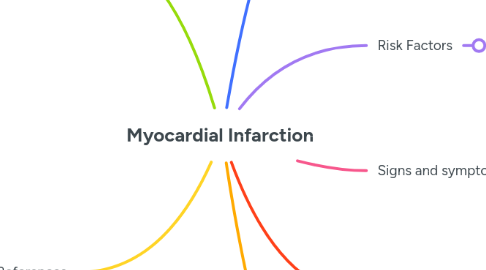
1. Can be different types such as STEMI and NSTEMI
1.1. STEMI
1.1.1. ST elevation MI, occurs from one or more occlusions of coronary arteries, pathogenic cause related to plaque rupture and thrombus formation. (Akbar et al., 2024). Patient Presenting with this type, more damage and worse prognosis
1.2. NSTEMI
1.2.1. NON ST elevation MI, thrombus disentigrates before tissue necrosis happens leading to ST depression and T wave inversion (Rogers, 2022).
2. References
2.1. Akbar, H, Foth, C, Kahloon, R.A. (2024). Acute ST-Segment Elevation Myocardial Infarction (STEMI). StatPearls Publishing. https://www.ncbi.nlm.nih.gov/books/NBK532281/ Lawes, R. (n.d.).Lecturio Resources. Myocardial Infarction (MI): Pathophysiology (Nursing) https://waldenu.lecturio.com/#/lecture/h/88727/127975 NIH. (n.d.). Heart Attack. Causes and Risk Factors. Retrieved on March 13, 2025 from https://www.nhlbi.nih.gov/health/heart-attack/causes Rogers, J. (2022). McCance & Huether’s Pathophysiology (9th ed.). Elsevier Health Sciences (US). https://online.vitalsource.com/books/9780323789899
3. Pathophysiology and etiology
3.1. localized areas of necrotic tissue in the heart
3.2. caused by an occlusion in the coronary artery, cutting off supply of oxygenated blood to heart muscle, it takes about 20 min of blockage to cause tissue to infarct (Lawes, n.d.).
3.2.1. can be caused by plaque buildup in arteries also known as atherosclerosis, eventually plaque area breaks off into artery causing blockage of blood flow to the heart and if untreated heart muscle starts to die (NIH, n.d.).
3.3. left anterior descending occlusion "widowmaker"-highest mortality rate because it takes out left ventricle. (Lawes, n.d.).
4. Risk Factors
4.1. high fat diet, high cholesterol, high blood pressure, diabetes, smoking, lack of exercise, overweight, family history, risk increases for men after age 45 and women 55 or after menopause (NIH, n.d.).
4.1.1. three or more of these conditions ex. high bp, high cholesterol and diabetes are known as metabolic syndrome and increase risk for an MI (NIH, n.d.).
5. Signs and symptoms
5.1. severe chest pain, pain that radiates to shoulder, jaw, neck, or left arm, indigestion, nausea and vomiting. (Rogers, 2022).
5.1.1. shortness of breath, sweating, light headedness, rapid or irregular heartbeat (NIH, n.d.).
6. Diagnostic tests or labs to confirm
6.1. EKG, Blood tests, ex. troponin, chest x-ray. 12 lead reveals changes in ST segments and T waves.Troponin levels most specifc indicator of MI, elevated 2 to 4 hours after onset of symptoms. (Rogers, 2022).
7. Treatment
7.1. STEMI
7.1.1. Emergent PCI and antithrombotics
7.2. NSTEMI
7.2.1. Antithrombotics, anticoagulation and/or PCI