
Technological Materials 1ºD ESO By Sergio González González

By Sergio González González San Vicente de Paúl Work: Realiza un mapa mental del tema de materiales tecnológicos

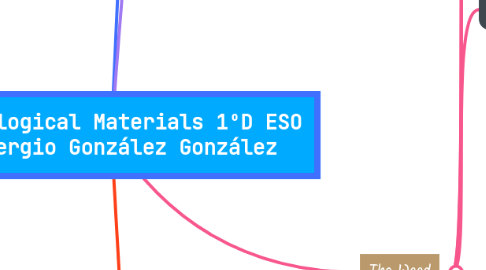
1. Technical Use Materials
1.1. Materials to build objects and come from raw materials
1.2. Raw Materials
1.2.1. Natural Materials
1.2.1.1. Transformed Materials
1.2.1.1.1. Woods
1.2.1.1.2. Metals
1.2.1.1.3. Plastics
1.2.1.1.4. Textile Materials
1.2.1.1.5. Construction Materials
2. The Election of Materials
2.1. Properties
2.1.1. Mechanicals
2.1.1.1. Hard
2.1.1.1.1. Dificult to scratch
2.1.1.2. Soft
2.1.1.2.1. Easy to scratch
2.1.1.3. Tenacious
2.1.1.3.1. Resist hits
2.1.1.4. Brittle
2.1.1.4.1. Don't resist hits
2.1.1.5. Elastic
2.1.1.5.1. Recover their form after they get stretched or deformed
2.1.1.6. Plastic
2.1.1.6.1. Remain deformed
2.1.1.7. Malleable
2.1.1.7.1. Can be easily extended
2.1.1.8. Ductile
2.1.1.8.1. Can be easily extended
2.1.2. Fisics
2.1.2.1. Conductors
2.1.2.1.1. Electrical Conductors
2.1.2.1.2. Heat Conductors
2.1.2.1.3. Sound Conductors
2.1.2.2. Insolators
2.1.2.2.1. Electrical Insolators
2.1.2.2.2. Heat Insolators
2.1.2.2.3. Sound Insolators
2.1.3. Sensory
2.1.3.1. Color
2.1.3.2. Tact
2.1.3.3. Texture
2.1.3.4. Shine
2.1.3.5. Transparency
2.1.4. Others
2.1.4.1. Ecological
2.1.4.1.1. toxicity, easy for recycling
2.1.4.2. Chemicals
2.1.4.2.1. resistance to oxidation
3. The Wood
3.1. Solid part y rigid from the trees
3.2. Tough, heat insulator and of electricity, sound conductor, resistant y porous
3.3. Obtaining
3.3.1. 1. Logging
3.3.2. 2. Cutting bark and branches
3.3.3. 3. Transport to sawmill
3.3.4. 4. Sawing
3.3.5. 5. Drying
3.3.6. 6. Cleaning, sanding and brushing
3.3.7. 7. Treatments and finishing
3.4. Tipes
3.4.1. Soft
3.4.1.1. Evergreen trees
3.4.1.1.1. fir, pine, plopar
3.4.2. Hard
3.4.2.1. Deciduous trees
3.4.2.1.1. chestnut, beech, oak
3.5. Transformed or Derived
3.5.1. Plywood
3.5.1.1. Artificial wood
3.5.1.1.1. Formed by
3.5.1.2. Resistant and uniformly
3.5.2. Fibreboard
3.5.2.1. Artificial wood
3.5.2.1.1. From
3.5.3. Cardboard
3.5.3.1. From
3.5.3.1.1. Collection of layers of paper
3.5.4. Paper
3.5.4.1. From
3.5.4.1.1. Pasta
3.5.4.2. A bit resistant
3.5.4.3. Easy to
3.5.4.3.1. Cut
3.5.4.3.2. Glue
3.5.4.3.3. Double
3.5.5. Cork
3.5.5.1. From
3.5.5.1.1. The bark of the cork oak
3.5.5.2. Lightweight material, watertight and good insulating of
3.5.5.2.1. Electricity
3.5.5.2.2. Heat
3.5.5.2.3. Sound
3.6. Environment
3.6.1. Biodegradable Material
3.6.1.1. Problems
3.6.1.1.1. Indiscriminate felling
3.6.1.1.2. Chemical process
4. The Metals
4.1. Hard Materials
4.2. Good conductors of
4.2.1. Heat
4.2.2. Electricity
4.2.3. Sound
4.3. Clasification
4.3.1. Non-Ferrous
4.3.1.1. Copper
4.3.1.1.1. Red
4.3.1.1.2. Bright
4.3.1.1.3. To make
4.3.1.2. Tin
4.3.1.2.1. Silver
4.3.1.2.2. Resistant to
4.3.1.2.3. Ductile
4.3.1.2.4. Pliable
4.3.1.2.5. 400 ºC
4.3.1.3. Aluminium
4.3.1.3.1. White
4.3.1.3.2. Very Light
4.3.1.3.3. Good conductor of
4.3.1.3.4. Non-Toxic
4.3.1.4. Zinc
4.3.1.4.1. White blue
4.3.1.4.2. Less abundant
4.3.1.4.3. Resistant to
4.3.2. Ferrous
4.3.2.1. Iron
4.3.2.1.1. Percentage of carbon
4.3.2.2. Steel
4.3.2.2.1. Percentage of carbon
4.3.2.3. Foundries
4.3.2.3.1. Percentage of carbon
4.4. Environment
4.4.1. Obtaining
4.4.1.1. Impact on the landscape
4.4.2. Transformation
4.4.2.1. Gas emissions
4.4.3. Obtaining (Steel)
4.4.3.1. Liberation of CO2
4.4.3.1.1. Greenhouse effect