

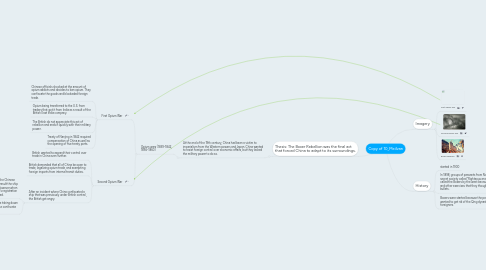
1. Thesis: The Boxer Rebellion was the final act that forced China to adapt to its surroundings.
1.1. At the end of the 19th century, China had been a victim to imperialism from the Western powers and Japan. China wanted to resist foreign control over economic affairs, but they lacked the military power to do so.
1.1.1. Opium wars (1839-1842, 1856-1860)
1.1.1.1. First Opium War
1.1.1.1.1. Chinese officials shocked at the amount of opium addicts and decides to ban opium. They confiscate the goods and blockaded foreign trade.
1.1.1.1.2. Opium being transferred to the U.S. from traders that got it from India as a result of the British East India company.
1.1.1.1.3. The British do not appreciate this act of rebellion and ends it quickly with their military power.
1.1.1.1.4. Treaty of Nanjing in 1842 required compensation of China as well as the opening of five treaty ports.
1.1.1.2. Second Opium War
1.1.1.2.1. British wanted to expand their control over trade in China even further.
1.1.1.2.2. British demanded that all of China be open to trade, legalizing opium trade, and exempting foreign imports from internal transit duties.
1.1.1.2.3. After an incident where China confiscated a ship that was previously under British control, the British get angry.