


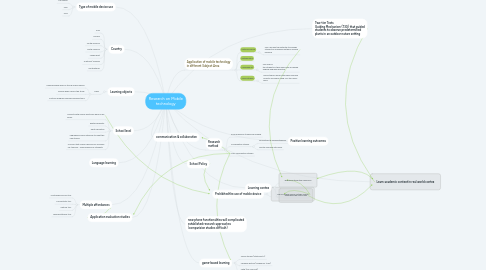
Research on Mobile technology
Wing Yan Hoにより
1. Type of mobile device use
1.1. Cell phone
1.2. PDA
1.3. IPod
2. Language learning
3. communication & collaboration
4. Country
4.1. Asia
4.2. Europe
4.3. South America
4.4. North America
4.5. Middle East
4.6. Australia/ Oceania
4.7. Multinational
5. School level
5.1. conflicts with school electronic device use policy
5.2. digital inequality
5.3. adult education
5.4. upgrading school networks to meet the new trends
5.5. Concern that mobile devices can increase off-task risk - risky behavior by students
6. Multiple affordances
6.1. multimedia-access tool
6.2. connectivity tool
6.3. capture tool
6.4. representational tool
7. Learning objects
7.1. Apps
7.1.1. Downloadable apps on touch screen device
7.1.2. Several apps used in the study
7.1.3. Custom designed complex learning tools
8. Application evaluation studies
9. Learn academic context in real world contex
10. Two-tier Tests Guiding Mechanism (T3G) that guided students to observe predetermined plants in an outdoor nature setting
11. Positive learning outcomes
12. new phone functionalities will complicated established research approaches (comparision studies difficult)
13. Prohibited the use of mobile device
13.1. Use of mobile device outside school
14. Application of mobile technology in different Subject Area
14.1. Natural science
14.1.1. PDA use had the potential to engage students in mobilized outdoor science learning
14.2. Mathematics
14.3. Language art
14.3.1. PDA use by the students in their daily lives increased English language practice
14.4. Social studies
14.4.1. more studies using customized learning objects and fewer using "off-the-shelf" apps
15. Research method
15.1. more empirical studies are needed
15.2. Comparative studies
15.2.1. connection to learning theories
15.2.2. Neutral learning outcomes