

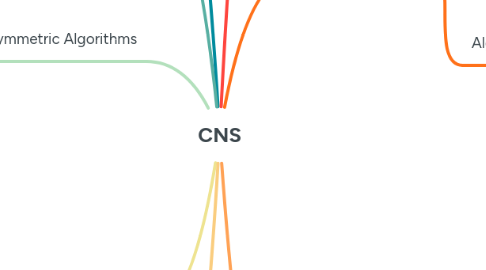
1. Exploit Techniques
1.1. Code Injection
1.2. Use-After-Free
1.3. DLL Injection
2. Security preliminaries
2.1. Confidentiality
2.2. Integrity
2.3. Authentication
2.4. Non-repudiation
3. Asymmetric Algorithms
3.1. RSA
3.2. Elliptic Curve Crytography (ECC)
3.3. Quantum Crytography
3.4. Applications
3.4.1. Digital Signatures
4. Symmetric Algorithms
4.1. Characteristics
4.1.1. Same "shared single key" to encrypt and decrypt a document.
4.2. Data Encryption Standard (DES)
4.3. Advanced Encryption Standard (AES)
4.4. Ciphers
4.4.1. Stream
4.4.1.1. Substitution
4.4.1.2. Transposition
4.4.2. Block
5. Network Exploits
5.1. Man-in-the-Middle (MitM) Attacks
5.2. Denial-of-Service (DoS) Attacks
5.3. Distributed Denial-of-Service (DDoS) Attacks
5.4. SQL Injection
6. Memory Corruption
6.1. Buffer Overflows
6.2. Format String Vulnerabilities
6.3. Pointer Manipulation
7. Hash Algorithms
7.1. Characteristics
7.1.1. Fixed Size
7.1.2. Unique
7.1.3. Original
7.1.4. Secure
7.2. Algorithm
7.2.1. Message Digest (MD)
7.2.1.1. MD2
7.2.1.1.1. Length is 16bits and is padded as needed.
7.2.1.2. MD4
7.2.1.2.1. Length is 512bits and is padded as needed.
7.2.1.3. MD5
7.2.1.3.1. Length is 512bits and is padded as needed.
7.2.2. Secure Hash Algorithm (SHA)
7.2.2.1. SHA-2 Secure hash, to date no vulnerabilities have been found.
7.2.3. Whirlpool
7.2.4. RACE Integrity Primitives Evaluation Message Digest (RIPEMD)
8. ENCRYPTION
8.1. Software Encryption
8.1.1. File and File System
8.1.2. Whole Disk
8.1.3. Pretty Good Privacy (PGP)
8.1.3.1. Most widely used asymmetric system for files and email messages on Windows systems and is a commercial product.
8.1.4. GNU Privacy Guard (GPG)
8.1.4.1. Runs on Windows, UNIX and Linux operating systems.
8.1.5. Microsoft Windows Encrypting File System (EFS)
8.1.5.1. Transparent to the user.
8.2. Hardware Encryption
8.2.1. USB Device
8.2.2. Hard Disk
8.2.3. Trusted Platform Module (TPM)
8.2.4. Hardware Security Module (HSM)