

Electromagnetic Spectrum
Door Wei Heng Pok
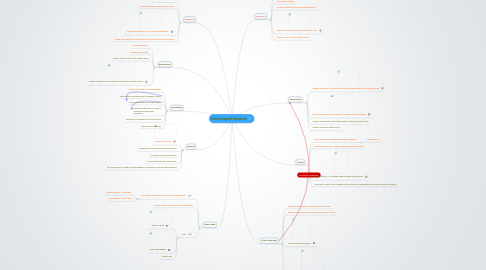
1. Visible Light
1.1. Only range of frequencies perceived by human eye.
1.1.1. High frequency - Violet light.
1.1.2. Low frequency - Red Light
1.2. Colour determined by frequency/wavelength.
1.3. Uses
1.3.1. Optical Fibres
1.3.2. Light Photography
1.3.3. Endoscopy
2. Infrared
2.1. Used in night vision.
2.2. I. Amplification of ambient infrared radiation.
2.3. II.Converted to electric signals.
2.4. III.Converted back into visible light.
2.5. For other devices, images created based on differences in surface temperatures.
3. Microwaves
3.1. Radio waves with short wavelengths.
3.2. Subjected to oscillating electromagnetic fields,
3.3. Polar water molecules rotate rapidly,
3.4. Heat generated due to friction/ collisions among water molecules.
3.5. Satellites use repeaters to transmit data.
3.6. Used in mobile phones.
4. Radio Waves
4.1. Lowest frequency.
4.2. Longest wavelength.
4.3. Used in remote control cars, walkie-talkie.
4.4. Waves reflected from lonoshphere (electrically charged layer).
5. What Is It?
5.1. Electromagnetic Waves.
5.2. Over a continuous range of frequencies.
5.3. Higher the frequency , the lower the wavelength.
5.4. Higher the frequency, greater the amount of energy carried by wave.
6. Ultra-Violet Rays
6.1. Stimulates production of melanin. Turns skin dark.
6.2. Excessive exposure can cause skin cancer and sunburn.
6.3. Is prominent to pollinators.
6.4. Ultraviolet watermarks used for security purposes.
7. X-Rays
7.1. High frequencies and high penetrating capability.
7.1.1. HAZARDOUS.