


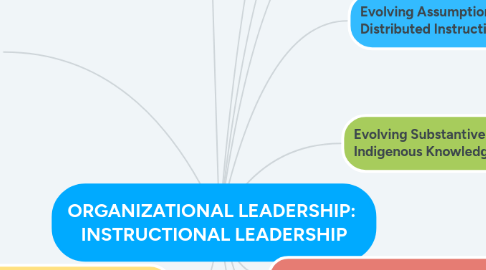
1. Future Directions in Instructional Leadership: Research Methodologies That Parallel Evolving Assumptions of Instructional Leadership
1.1. Complexity of Schools: Systems and Structures
1.2. Contexts: High Accountability Systems
2. Overview of Instructional Leadership
2.1. Studies investigated factors contributing to high-achieving schools in the United States
2.1.1. Weber (1971)
2.1.2. State of New York—Office of Education Performance Review (1974)
2.1.3. Madden, Lawson, and Sweet (1976)
2.1.4. Brookover and Lezotte (1977)
2.2. Edmonds (1979) suggested six hallmarks of effective schools
2.2.1. strong administrative leadership
2.2.2. high expectations for all students;
2.2.3. orderly environment conducive to teaching and learning;
2.2.4. academic emphasis;
2.2.5. flexible resource mobilisation to better teaching and learning activities;
2.2.6. frequent monitoring of student progress
3. Evolving Research in Instructional Leadership
3.1. Instructional leadership research in the early 1980s generally adopted a directeffects model of bivariate leadership effects (Hallinger & Heck, 1996; Van de Grift & Houtveen, 1999).
3.2. Educational leadership research adopts a spectrum of disciplined inquiry methods.
4. Hallinger and Murphy’s
4.1. In 1985 model, it has been the most fully tested and widely adopted in the research on instructional leadership
4.2. proposes three dimensions for the instructional leadership construct:
4.2.1. Defining the school’s mission
4.2.1.1. framing the school’s goals
4.2.1.2. communicating the school’s goals
4.2.2. managing the instructional programme
4.2.2.1. coordinating the curriculum,
4.2.2.2. supervising and evaluating instruction,
4.2.2.3. monitoring student progress
4.2.3. promoting a positive school learning climate
4.2.3.1. includes several functions
4.2.3.1.1. Protects instructional time
4.2.3.1.2. Provide incentives for teachers
4.2.3.1.3. Provide incentives for learning
4.2.3.1.4. Promotes professional development
4.2.3.1.5. Maintain high visibility
4.3. Hallinger (2003, 2005)
4.3.1. highlighted five notable descriptions of principals as effective instructional leaders
4.3.1.1. principals as ‘strong, directive leaders’;
4.3.1.2. principals as managers of instructional and curricular activities;
4.3.1.3. principals as ‘culture builders’;
4.3.1.4. principals as ‘goal-oriented leaders’;
4.3.1.5. principals leading from ‘a combination of expertise and charisma’.
5. Evolving Assumptions of Instructional Leadership: Principal Leadership to Distributed Instructional Leadership
5.1. Includes
5.1.1. Principal Instructional Leadership
5.1.1.1. Principals were described as providing the vision and direction for the school.
5.1.2. Distributed/Shared Instructional Leadership
5.1.2.1. Principal as the instructional leader focus on the principal’s role in the development and distribution of understandings, skills, and attributes across the school organizational spectrum.
6. Instructional leadership regained its prominence in the leadership discourse in the early 2000s.
7. Evolving Substantive Theories of Instructional Leadership: Anglo-Saxon to Indigenous Knowledge
7.1. Includes
7.1.1. Vision
7.1.2. Managing Teaching and Learning
7.1.3. Managing Teaching and Learning
7.1.4. Conducive Learning Environment
8. Traditional instructional leadership models
8.1. Considered the principal as a sole source of influence
9. Instructional leadership has documented positive effects over other leadership models.
10. Scope for Indigenous Substantive Theory Building in Instructional Leadership
10.1. Include
10.1.1. Social Network Analysis