


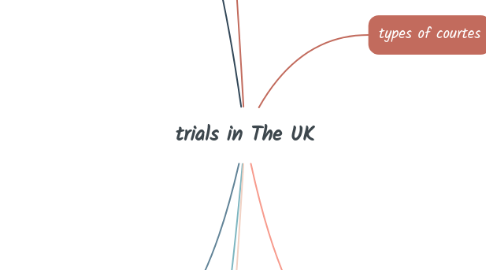
1. participants in Magistrates court
1.1. soliciters(act ad council for the defence)
1.2. barristers
1.3. magistrates
1.4. a district judge
2. the procedure of a trial
2.1. the prisoner pleads guity or not guity
2.2. the clark introduces the defended and offended
2.3. the procecuting council outlines the case
2.4. presents all the charges, gives convincing proofs, describes the circumstances
2.5. gives direct evidence against the accused
2.6. witnesses for the prosecution
2.7. proves the prisoner’s guilt
2.8. the council for the defence(soliciter in m. court; barrister in the crown court) begins cross-examination
2.9. proves his point
2.10. the jury rearch the verdict and make their desicion
2.11. the judge passes sentence or sets the accused free
3. types of criminal offences
3.1. summary
3.1.1. the less serious offences
3.1.1.1. are tried in the magistrates’ court, without a jury, before a bench of two or three lay magistrates or by one district judge
3.2. indictable
3.2.1. the most serious offences(murder, manslaughter, rape and arson)
3.2.1.1. This court has the duty to assess whether there is evidence or not to send the accused for trial by jury. If there is enough evidence, a trial will take place in the Crown court before a judge and a jury. This procedure is called “the committal,”
3.3. triable
3.3.1. ‘indictable offence’ or as a ‘summary offence’(deception, theft, dangerous driving and some others)
3.3.1.1. when an offence is triable either way, the magistrates’ court must decide, if the case should be tried on indictment or summarily
4. lawyers
4.1. Soliciters
4.2. Barristers
4.3. Judges
4.4. Coroners
5. people in law cases
5.1. Soliciters
5.2. Lawyers
5.3. Judges
5.4. Jury
5.5. Magistrates
5.6. Clarks
6. types of courtes
6.1. the Crown court
6.1.1. If there is not enough evidence and the case is serious
6.1.1.1. arson, murder, kidnapping, buying and selling drugs, terrorist attacks, assasination, rape, hijjack, smuggle, embezzlement
6.2. the Magistrates' court
6.2.1. If there is enough evidence and the case is less serious
6.2.1.1. shoplifting, muggler, burglary, pickpocketing, forge, bribery
6.3. the Court of Appeal
6.3.1. If someone is found guilty in the Crown Court, but thinks that this was wrongly decided
6.4. juvenile courts
6.4.1. deal with offenders under seventeen
6.5. coroners’ courts
6.5.1. investigate violent, sudden or unnatural deaths
6.6. Supreme court
6.6.1. appeal only