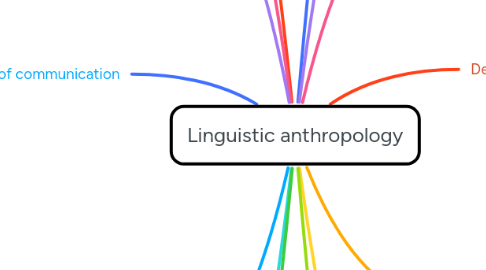
1.1. Internal and external changes in language. The classification of language as well as reconstruction. genetic relationships; meaning they have connections to a language family or all those languages that are related by having descended from a singly ancestral language.
1.2. “The assignment of related languages to a language family implies the earlier existence of an ancestral language from which all modern languages of the family have descended” (Language, Culture, and Society James Stanlaw, Nobuko Adachi & Zdenek Salzmann page 265)
1.3. “Languages change not only internally from within but also as a result of external influences. The reasons for such changes vary; here we will illustrate them by discussing sound changes known as assimilation, dissimilation, and metathesis, and a grammatical change by means of which certain irregular forms become regularized” (James Stanlaw, Nobuko Adachi & Zdenek Salzmann page 248)
2. Languages in variation and contact
3. Languages in variation and contact
3.1. “The recognition of individuals by voice alone is possible because of their idiosyncratic combination of voice quality, pronunciation, grammatical usage, and choice of words” (James Stanlaw, Nobuko Adachi & Zdenek Salzmann page 272)
3.2. “Although about 6,900 languages, assignable to several hundred language groups (families), are currently spoken, the overwhelming majority of people speak languages that belong to only a dozen or so families, with Indo-European at the top of the list for most speakers.” (James Stanlaw, Nobuko Adachi & Zdenek Salzmann page 290)
3.3. Development of a particular way of saying something and its circumstances. We view dialect and as well as styles of languages. We have viewed language contact and how languages can die and mix but they new languages are born.
4. Ethnography of communication
4.1. Linguistic studying structure of language found that all languages are fundamentally alike. Language and speech reflect uniques
4.2. “A speech act may be a greeting, apology, question, compliment, self-introduction, or the like. Although normally attributable to a single speaker, collective speech acts also exist, such as, for example, the “Amen” said by a congregation or the reciting of the Pledge of Allegiance by young pupils. In size, a speech act may range from a single word (“S”) (James Stanlaw, Nobuko Adachi & Zdenek Salzmann page 303)
4.3. “Within such a speech situation, a number of speech events invariably take place: for example, one group may be reminiscing about favorite teachers and classroom antics, those in another group may be giving brief accounts of what they have been doing since graduation or the last reunion, and still others may be simply swapping jokes and stories. Within these speech events, the telling of a single joke or personal experience is a speech act.” (James Stanlaw, Nobuko Adachi & Zdenek Salzmann page 304)
4.4. “Describing a language with emphasis on its function as the primary means of communication requires more than simply describing its sounds (phonology) and grammatical structure (morphology and syntax).” James Stanlaw, Nobuko Adachi & Zdenek Salzmann page 305)
4.5. “A speech act may be a greeting, apology, question, compliment, self-introduction, or the like. Although normally attributable to a single speaker, collective speech acts also exist, such as, for example, the “Amen” said by a congregation or the reciting of the Pledge of Allegiance by young pupils. In size, a speech act may range from a single word (“S”). Language, Culture, and Society James Stanlaw, Nobuko Adachi & Zdenek Salzmann page 303)
5. Culture as cognition
5.1. Semantics; the study of characteristics of signaling systems, for instance signs and their use
5.2. How does culture determine language, learning the understanding of words in a cultural competent way and viewing persuasive language.
5.3. “We have already seen that minimal units of sound (phonemes) are used to compose morphemes, the smallest units of grammatical or lexical function. These morphemes combine to make up the words of our vocabulary. Words form into sentences, and these sentences make up conversation and discourse. But when does language cease to be self-contained? At some point language must make contact with the outside world. As the noted twentieth-century linguist Dwight Bolinger said, this point of contact is what we call meaning, and the study of meaning is generally referred to as semantics” Language, Culture, and Society James Stanlaw, Nobuko Adachi & Zdenek Salzmann. Pg. 319
5.4. “Some early rhetoricians argued that the things in the world (referents) and the words (symbols) that refer to them are mediated by concepts in the mind that underlie them (thought). This is reflected on the left in the diagram that follows, the famous “semiotic triangle” of Ogden and Richards (1923:99). For example, seeing an actual physical referent, such as a “tree,” conjures up thoughts about trees, giving rise to the spoken symbol, that is, the word T-R-E-E. Of course, things can go the other direction : hearing someone say the worh “tree” puts all these same process in reverse motion. There have been dozens of varieties of the semiotic triangle—all emphasizing different aspects of the connections between objects in the world, the words used to symbolize them, and the thoughts these words generate—and we will use the version depicted on the right for our discussion here. ” Language, Culture, and Society James Stanlaw, Nobuko Adachi & Zdenek Salzmann. Pg. 324
6. Language and ideology
6.1. The ways that language marks women and how it makes it special. We learned to identify women and men language from different cultures. Understand the language practices of LGBQT community. Language changes depending on the situation and who’s speaking.
6.2. Language ideology- beliefs about a language held by its users as rationalization for their concepts. Language can demonstrate obvious differences in class, gender, class status and education.
6.3. Language ideology- beliefs about a language held by its users as rationalization for their concepts. Language can demonstrate obvious differences in class, gender, class status and education.
7. “Early sociolinguists and anthropologists thought that such variety was analogous to geographic dialects. That is, just as differences in speech could result from geographic isolation, social isolation due to ethnicity, nationality, or race could also create linguistic variation. For example, why don’t people always choose the speech variety that would bring to them the most benefit in society? Answering such a question has to do with language ideology—beliefs about a language expressed by speakers as their conceptualization of the nature and function of language” Language, Culture, and Society James Stanlaw, Nobuko Adachi & Zdenek Salzmann. Pg. 438
8. Linguistic and methods
8.1. “Linguistics does not refer to the study of a particular language for the purpose of learning to speak it; rather, it refers to the analytical study of language, any lan-guage, to reveal its structure—the different kinds of language units (its sounds, smallest meaningful parts of words, and so on)—and the rules according to which these units are put together to produce stretches of speech.” (Stanlaw, Adachi, Salzmann 2017 pg. 30)
8.2. Briefly, if anthropology is the study of humanity, and language is one of the most characteristic features of humankind, then the study of language is an obvious and necessary aspect of anthropology as a whole. (Stanlaw, Adachi, Salzmann 2017 pg. 31)
8.3. Anthropology has many subfields. There are many myths people have about language and why. It was interesting how I found out languages have certain characteristics but then realized it’s some of the myths but it’s interesting.
8.4. This is all the study of humans and linguistics perspective. Anthropology the holistic study of humankind.
9. Nuts and bolts
9.1. Phonology; understanding the structure of a language can help identify important parts instead of memorizing an entire language. This chapter states the characteristics of speech.
9.2. We view phoneme which is the small segment of speech using the phonetic alphabet we can create written transcription to analyze.
9.3. “Each language represents a particular variety of the general language code—in other words, no two languages are alike; although some are structurally similar, others are quite different. Understanding the workings of a foreign language rather than simply learning to speak it requires some acquaintance with the plan according to which a particular language code is constructed.” (James Stanlaw, Nobuko Adachi & Zdenek Salzmann 2017 pg. 68)
9.4. “The simplest way to establish phonemic contrasts in a language is by means of minimal sets, in which each word has a different meaning but varies from the rest in one sound only” (James Stanlaw, Nobuko Adachi & Zdenek Salzmann 2017 (pg. 91)
10. Morphemes and non verbal communication
10.1. For this chapter we view morphemes and morphology we learn the importance and the different kinds. Which is a contrastive unit of grammar. It is the study of word structure including classification of and interrelation among morphemes.
10.2. We also view non verbal communication. A very important thing is nonverbal features contribute to communication a lot. Sign language as well we learned is a real spoken language. We viewed how different cultures have space, time, posture, and gestures and their usage.
10.3. “Full understanding requires the identification of even the smallest meaningful segments (morphemes) that make up the text. Every language has its own stock of morphemes and arranges them into words, phrases, and sentences in a particular way, and every language has its own grammatical categories that vary from one language to the other.” (James Stanlaw, Nobuko Adachi & Zdenek Salzmann 2017 pg. 114)
11. Development and evolution of language
11.1. We have viewed how some languages have died. As well how much language has evolved. We have viewed language through species. Evolution of language even gives us a huge example of how language applies to animals and humans.
11.2. “Like all aspects of the human condition, language must also have been a product of evolution. However, unlike items of material culture, language leaves no physical traces of its evolutionary past. Until recently, many anthropologists, linguists, and biologists believed that there was little that could be said about the origins of language.” (James Stanlaw, Nobuko Adachi & Zdenek Salzmann page 194)
11.3. “another issue we must confront is language death. This occurs, obviously, when the last of its speakers die. Language death has been just as much a part of the evolutionary process as language expansion and language growth.” (James Stanlaw, Nobuko Adachi & Zdenek Salzmann page 198)
11.4. Language death is and has been a big problem people have been forced to stop using their language and causes language death.
12. Acquiring language
12.1. Learning more than one language can be difficult. We learn about bilingualism and multilingual. Language serves as people’s badge of ethnic identity.
12.2. We have viewed code switching. Code switching is changing from one language or language variety to another in the course of a spoken interaction.
12.3. “Neurolinguistics—the branch of linguistics concerned with the role the brain plays in language and speech processing—explores questions regarding which parts of the brain control language and speech; how the brain encodes and decodes speech; and whether the controls of such aspects of language as sounds, grammar, and meaning are neuroanatomically distinct or joint.” (James Stanlaw, Nobuko Adachi & Zdenek Salzmann page 229)
12.4. “In most places in the world, there are not only dialects but several languages present in a community, the speakers possessing varying degrees of facility. In these multilingual situations, the codes—that is, language varieties or languages—often become blended. This is so common that linguists have special terms for this blending: code-switching and code-mixing.” (James Stanlaw, Nobuko Adachi & Zdenek Salzmann page 234)
13. Language culture and thought
13.1. Sapir-Whorf hypothesis and its components, linguistic determinism, and linguistic relativity, Explain basic color nomenclature theory and why it is important. Provide some philosophical and theoretical alternatives to linguistic relativity. Our language connects to the way we view materials and processes them.
13.2. “linguistic determinism, namely, that the way one thinks is determined by the language one speaks, and linguistic relativity, that differences among languages must therefore be reflected in the differences in the worldviews of their speakers.” Language, Culture, and Society James Stanlaw, Nobuko Adachi & Zdenek Salzmann. Pg. 346
13.3. “Differences of principles of classification are found in the domain of sensations. For instance: it has been observed that colors are classified in quite distinct groups according to their similarities, without any accompanying difference in the ability to distinguish shades of color. What we call green and blue is often combined under a term like “gall-color, ” or yellow and green are combined into one concept which may be named “color of young leaves.” In course of time we have been adding names for additional hues which in earlier times, in part also now in daily life, are not distinguished. The importance of the fact that in speech and thought the word calls forth a different picture, according to the classification of green and yellow or green and blue as one group can hardly be exaggerated.” Language, Culture, and Society James Stanlaw, Nobuko Adachi. Pg. 357
13.4. “linguistic determinism, namely, that the way one thinks is determined by the language one speaks, and linguistic relativity, that differences among languages must therefore be reflected in the differences in the worldviews of their speakers.” Language, Culture, and Society James Stanlaw, Nobuko Adachi & Zdenek Salzmann. Pg. 346
14. Language and gender
14.1. Linguistically we can look at gender as a complex system based on status and privilege. Men show patterns of going from high pitch, to low pitch to show excitement, surmise and concern. Women use all four: dynamic, make greater use of para linguistic, broader pitch use.
14.2. Many languages give grammatical priority to men. Many forms of gendered language use in America are becoming less frequent this could be a sign of equality between genders. Speech behavior and vary by ethnicity, social class, economics, and geography.
14.3. In American English, some differences have been noted in intonational patterns between male and female speakers. If one analyzes intonational contours as four relative pitch levels, then men tend to use only three, hardly ever reaching the highest one. Consider, for example, how men and women say the phrase “Oh, that’s terrible!” Women’s range frequently includes all four. Among the contours very rarely heard from men is the full downglide from the highest to the lowest pitch level, as when expressing surprise, excitement, concern, and the like. In general, women’s speech appears to be more dynamic, making greater use of paralinguistic features and extending over a broader pitch range.” Language, Culture, and Society James Stanlaw, Nobuko Adachi & Zdenek Salzmann. Pg. 385