Stroke
af toto nwankwo
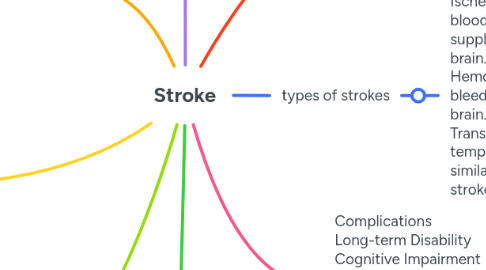
1. types of strokes
1.1. Ischemic Stroke: Occurs when a blood clot obstructs a vessel supplying blood to the brain. Hemorrhagic Stroke: Results from bleeding within or around the brain. Transient Ischemic Attack (TIA): A temporary period of symptoms similar to those of a stroke.
1.1.1. Risk Factors
1.1.1.1. Modifiable:
1.1.1.1.1. Modifiable: Hypertension: A leading risk factor for both ischemic and hemorrhagic strokes. Smoking: Significantly increases stroke risk. Diabetes: Elevates the risk of ischemic stroke. Obesity: Associated with a higher incidence of stroke among younger adults. Physical Inactivity: Contributes to several cardiovascular risk factors.
1.1.1.2. Non-Modifiable:
1.1.1.2.1. Non-Modifiable: Age: Risk increases with age. Family History: Genetic predisposition can elevate risk. Gender: Certain stroke types may be more prevalent in specific genders. Ethnicity: Higher risk observed in specific populations.
2. Prevention Lifestyle Modifications: Diet: Adherence to a Mediterranean diet rich in fruits, vegetables, and whole grains is recommended. Exercise: Engaging in regular physical activity reduces stroke risk. Smoking Cessation: Quitting smoking significantly lowers stroke risk. Alcohol Moderation: Limiting alcohol intake can prevent conditions like holiday heart syndrome, which increases stroke risk. Medical Management: Antihypertensives Anticoagulants Statins
3. Complications Long-term Disability Cognitive Impairment Emotional Changes: Post-stroke depression and anxiety are common. Increased Risk of Subsequent Strokes
4. Complications Long-term Disability Cognitive Impairment Emotional Changes: Post-stroke depression and anxiety are common. Increased Risk of Subsequent Strokes
5. Role of the Interdisciplinary Team Neurologists Nurses Physical Therapists Speech Therapists Social Workers Dietitians
6. Treatment Acute Phase: Thrombolysis: Administration of tPA for eligible ischemic stroke patients. Endovascular Therapy: Mechanical thrombectomy for large artery occlusions. Surgical Intervention: For hemorrhagic strokes, procedures to alleviate intracranial pressure may be necessary. Rehabilitation: Physical Therapy Speech Therapy Occupational Therapy
7. Signs and Symptoms (Use FAST acronym) Face drooping Arm weakness Speech difficulty
8. Diagnosis Neurological Examination Imaging: CT scans and MRIs are essential for accurate diagnosis. Blood Tests Echocardiogram Carotid Ultrasound


