


1. Penicillinase-sensitive penicillins
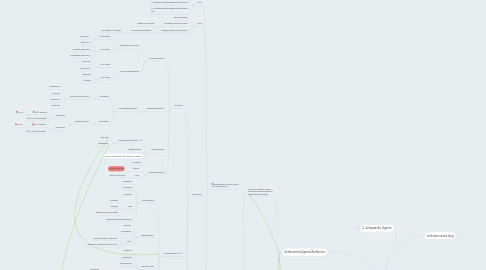
2. Antibacterial Agents/Antibiotics
2.1. Cell Wall Synthesis: PBP's (penicillin binding proteins)= most prominent target
2.1.1. Peptidoglycan Cross-linking ALL BETA LACTAM
2.1.1.1. MOA
2.1.1.1.1. 1. binding to penicillin-binding proteins (PBPs) located in cell wall
2.1.1.1.2. 2. inhibition of peptidoglycan crosslinking
2.1.1.1.3. 3. Autolysis and the death of the bacterial cell
2.1.1.2. MOR
2.1.1.2.1. beta-lactamase
2.1.1.2.2. Structural changes in PBPs
2.1.1.2.3. Changes in the porin structure
2.1.1.3. Drug Class
2.1.1.3.1. Penicillins
2.1.1.3.2. Cephalosporins (I-V):
2.1.1.3.3. Carbenepem
2.1.1.3.4. Monobactam
2.1.1.4. B-lactamase Inhibitor
2.1.1.4.1. bind irreversibly to the catalytic site of beta lactamases produced by bacteria to prevent hydrolysis of penicillins
2.1.1.4.2. antibiotic
2.1.2. Peptidoglycan synthesis
2.1.2.1. Vancomycin
2.1.2.2. Bacitracin
2.2. Ribosomes/Protein synthesis
2.2.1. 50s
2.2.1.1. Chloramphenicol
2.2.1.2. Clindamycin
2.2.1.3. Oxazolidinones (Linezolid)
2.2.1.4. Macrolides
2.2.1.5. Streptogramins
2.2.1.6. READ HERE
2.2.2. 30s
2.2.2.1. Aminoglycosides
2.2.2.2. Tetracyclines
2.3. Cell Membrane (primary target is Gram negative outer membranes)
2.3.1. polymixin-B
2.3.2. Colistin (polymixin-E)
2.3.3. Gramicidin
2.3.4. Daptomycin (GRAM POSITIVE)
2.4. Metabolic Enzymes/folate synthesis
2.4.1. Sulfonamides
2.4.2. Trimethoprim
2.4.3. READ HERE
2.5. mRNA synthesis (RNA polymerase)
2.5.1. Rifampin
2.6. Nucleic Acid synthesis (DNA replication) - targets topoisomerases
2.6.1. Fluoroquinolones
2.6.1.1. READ HERE
2.7. Damages DNA
2.7.1. Metronidazole
2.7.1.1. READ HERE