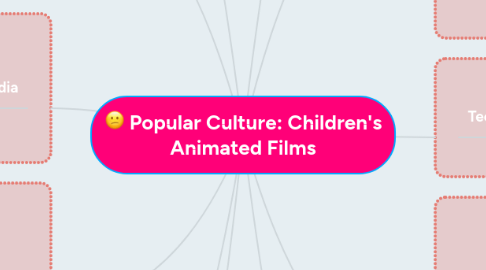
1.1. Continuities: - Creation of films - Fairy tales/happily ever afters - Good vs Evil - Target Audience: Kids & Family - Money based decision making - Theater releases
1.2. Changes: - Bonus features in re-releases - Technology: Computerized animation - Online stores and websites - Movement away from Princess movies - Interactive games - Target audience: Boys & Men
2. CAFs Consumption
2.1. Cradle to Grave - Disney Baby website - developed by the Momgineers - 2011: Disney gave out free 'cuddly bodysuits' to 580 hospitals - 2000: Bought the Baby Einstein company
2.2. Consumer Gap: - Bought marvel comics for $4 billion in 2009 - appealing to boys - Joined computer gaming industry: e.g. Club Penguin
2.3. Fairy tale Wedding: - Disney Princess inspired wedding dressing: Attracts audience of 20 to 30 year olds
3. Media
3.1. - Disney controls a large majority of the media - Media networks buy out financial competitors, giving them greater power. - Disney paraphernalia gets advertised by media earning them more money - Disney's control allows them to control how they are perpetuated.
4. Ethnicity and Access
4.1. Ability to access CAFs depends on: - Location - Wealth / socio-economic status - Age - Culture
4.2. Social stereotypes on race and gender roles perpetuated in CAFs impacts an individual's approach to accessing it e.g. The role of men as violent and the role of women as submissive
5. Perceptions of Popular Culture
5.1. Reasons for resisting Disney: - Capitalism - Stereotypical gender roles - Disney mythology does not always coincide with Western ideologies - Some radicalists believe there are subliminal messages - Inappropriate themes for children
5.2. e.g. The Baptist Boycott 1977 - American Southern Baptist - Against Disney's support of gays, witchcraft, and 'satanic themes' - Boycotted Disney for 8 years
6. Future of Popular Culture
6.1. Technology: - Fast and more efficient levels of production - Elimination of the drawing/sketching method
6.2. Consumption: - More accessible - Increased number of theme parks / resorts
7. Commodification
7.1. A social process by which an item is turned into a consumer product in rediness to be traded
7.2. Children's Animated Films are commodities
8. Mythology
8.1. A set of stories that serve to support a world view or historical events - providing framework for societies to explain practice
8.2. Disney myths: - Happily ever after - Talking animals - Good vs Evil - Dreams always come true - Prince charming
8.3. Princess myths: Traditional: - Born to be homemakers - Saved by Prince Charming - Young, pretty and obedient - Responsible Modern: - Independent - Masculine actions
9. Technology and Globalisation
9.1. 2006: Disney was the first company to sell films and TV shows online - through Itunes
9.2. 'Disney Movies Anywhere' App released in 2014
10. Control
10.1. Stakeholders: Someone who's investing interest in something including marketers, governments, global groups, media, etc.
10.2. Media: - Disney is the largest media network in the world, giving them control over advertising, marketing and social media - This media can dictate the success of a popular culture
10.3. Power and Authority: - Micro: Family - introducing and restricting use of CAFs - Meso: CAFs can be studied through instituations - Macro: Disney's CEO, Michael Eisner, has control over the company, hence it's perpetuation in the media
11. CAFs Reflecting Social Values
11.1. Contemporary Values - Protecting the environment: Wall-E - Equality in gender roles: Mulan, Frozen, Shrek - Single parenting: Toy Story, Tangled
11.2. Contribution to Society Positive: - Empowers women - Encourages racial equality - Hidden education/morals Negative: - Inaccuracies in historical events - Older films are stereotypical - Pressure to purchase paraphenalia