Unlock the full potential of your projects.
Try MeisterTask for free.
Non hai un account?
Iscriviti gratis
Naviga
Mappe in primo piano
Categorie
Gestione del progetto
Affari e obiettivi
Risorse umane
Brainstorming e analisi
Marketing e contenuti
Istruzione e note
Intrattenimento
Vita
ICT
Design
Sintesi
Altro
Lingue
English
Deutsch
Français
Español
Português
Nederlands
Dansk
Русский
日本語
Italiano
简体中文
한국어
Altro
Mostra mappa intera
Copia ed edita mappa
Copia
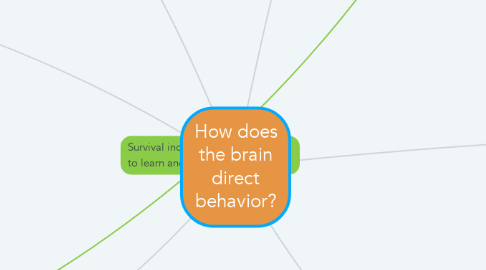
How does the brain direct behavior?
Altro
LJ
Lauren Joseph
Seguire
Iniziamo.
È gratuito!
Iscriviti con Google
o
registrati
con il tuo indirizzo email
Mappe mentali simili
Schema mappa mentale
How does the brain direct behavior?
da
Lauren Joseph
1. Emotion
2. Mental Health
3. Amygdala associated with fear, anxiety, and aggression
4. Ventral Tegmental Area controls dopamine release
5. Prefrontal Cortex involved in regulating emotion
6. Survival Behavior
7. Brainstem promotes movement and arousal
8. Thalamus regulates sensory integration
9. Basal Ganglia regulates coordinated movement
10. Cerebellum controls timed movements
11. Pons controls sleep, attention, and arousal
12. Medulla controls respiration
13. Compose the hindbrain
14. Involved in feelings of love
15. Parts of the forebrain (telencephalon)
16. Substantia nigra is part of the basal ganglia and produces dopamine necessary for movement
17. Midbrain associated with vision, hearing, motor control, and alertness
18. Frontal lobe associated with cognitive functioning, problem solving, and language
19. Parietal lobe processes sensory information
20. Occipital lobe is responsible for vision
21. Parts of the reward system- regulates desire, associative learning, and feelings of pleasure
22. Last part of the brain to develop evolutionarily and in modern children as they age (slow development)
23. Raphe nucleus releases serotonin to enhance effects of dopamine when expecting a reward
24. Increased amygdala activity in response to stress can contribute to the development of mental illness
25. Gene regulation in prefrontal cortex is decreased when socially isolated
26. Some psychiatric disorders associated with decreased gray matter in the braun
27. Decreased hippocampus volume associated with depression
28. Learning and Memory
29. Social Behavior
30. Sexual Behavior
31. Hippocampus involved in learning, memory, and motivation
32. Neocortex size positively correlated with average social group size
33. Fusiform Gyrus responsible for recognizing faces
34. Neocortex involved in memory and associations
35. Prefrontal cortex controls personality and social behavior
36. Hypothalamus regulates drive
37. Hypothalamus regulates motivation
38. Amygdala associated with memory
39. Ventral Tegmental Area regulates feelings of reward and is activated in orgasm
40. Parts of the forebrain (diencephalon)
41. Caudate nucleus involved in storing and processing of memories
42. Temporal lobe associated with developing sensory memories
43. Nucleus accumbrens involved in sexual motivation
44. Parts of the limbic system-regulates emotion. memory, and arousal
45. medial preoptic area (part of the hypoothalamus) controls proceptive behavior and copulation
46. Prefrontal cortex less active in sex to limit reason and logic
47. Social behavior was promoted by bipedalism and bipedalism promoted tool use which fosters social cooperation
48. Amygdala activated during periods of social stress
49. Concepts:
Comincia. È gratis!
Connetti con Google
o
Registrati