


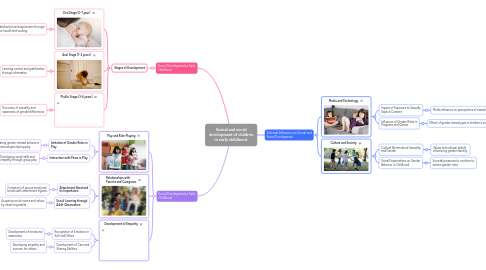
1. Sexual Development in Early Childhood
1.1. Stages of Development
1.1.1. Oral Stage (0-1 year)
1.1.1.1. Satisfaction and exploration through the mouth and sucking.
1.1.2. Anal Stage (1-3 years)
1.1.2.1. Learning control and gratification through elimination.
1.1.3. Phallic Stage (3-6 years)
1.1.3.1. Discovery of sexuality and awareness of gender differences.
2. Social Development in Early Childhood
2.1. Play and Role-Playing
2.1.1. Imitation of Gender Roles in Play
2.1.1.1. Imitating gender-related behaviors and stereotypes during play.
2.1.2. Interaction with Peers in Play
2.1.2.1. Developing social skills and empathy through group play.
2.2. Relationships with Parents and Caregivers
2.2.1. Attachment Bond and its Importance
2.2.1.1. Formation of secure emotional bonds with attachment figures.
2.2.2. Social Learning through Adult Observation
2.2.2.1. Acquiring social norms and values by observing adults.
2.3. Development of Empathy
2.3.1. Recognition of Emotions in Self and Others
2.3.1.1. Development of emotional awareness.
2.3.2. Development of Care and Sharing Abilities
2.3.2.1. Developing empathy and concern for others.
3. External Influences on Sexual and Social Development
3.1. Media and Technology
3.1.1. Impact of Exposure to Sexually Explicit Content
3.1.1.1. Media influence on perceptions of sexuality.
3.1.2. Influence of Gender Roles in Programs and Games
3.1.2.1. Effect of gender stereotypes in children's media.
3.2. Culture and Society
3.2.1. Cultural Norms about Sexuality and Gender
3.2.1.1. Values and cultural beliefs influencing gender identity.
3.2.2. Social Expectations on Gender Behavior in Childhood
3.2.2.1. Societal pressures to conform to certain gender roles.