
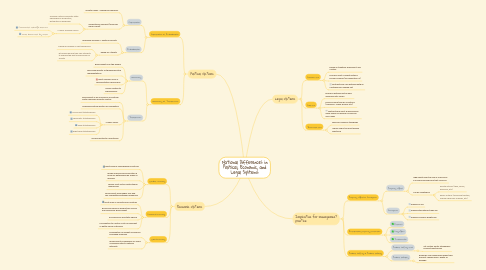
National Differences in Political, Economic, and Legal Systems


1. Economic systems
1.1. Market economy
1.1.1. most likely in individualism countries
1.1.2. goods and services production & price are determined by supply & demand
1.1.3. supply must not be restricted by monopolies
1.1.4. government encourages free and fair competition between producers
1.2. Command economy
1.2.1. most likely in collectivism countries
1.2.2. goods and services production & price are planned by government
1.2.3. all businesses are state-owned
1.2.4. no incentive to control costs, be efficient or better serve customers
1.3. Mixed economy
1.3.1. combination of market economy & command economy
1.3.2. governments responsible for firms considered vital to national interests
2. Political systems
2.1. Collectivism vs. Individualism
2.1.1. Collectivism
2.1.1.1. society needs > individual freedoms
2.1.1.2. supported by socialist (from Karl Marx's ideas)
2.1.1.2.1. socialism nations advocate state ownership of production, distribution & exchange
2.1.1.2.2. 2 major socialism forms
2.1.2. Individualism
2.1.2.1. individual freedom > political pursuits
2.1.2.2. based on 2 tenets
2.1.2.2.1. individual freedom & seft-expression
2.1.2.2.2. let people pursue their self-interests to achieve the best overall good for society
2.2. Democracy vs. Totalitarian
2.2.1. Democracy
2.2.1.1. government is by the people
2.2.1.2. exercised directly or through elected representatives
2.2.1.3. most common form is 'representative democracy'
2.2.1.4. usually related to individualism
2.2.2. Totalitarian
2.2.2.1. government is by one person or political party exercises absolute control
2.2.2.2. opposing political parties are prohibited
2.2.2.3. 4 major forms
2.2.2.3.1. Communist totalitarianism
2.2.2.3.2. Theocratic totalitarianism
2.2.2.3.3. Tribal totalitarianism
2.2.2.3.4. Right wing totalitarianism
2.2.2.4. usually related to collectivism
3. Legal systems
3.1. Common law
3.1.1. based on tradition, precedent, and custom
3.1.2. found in most of Great Britain’s former colonies (including the US)
3.1.3. contracts are very detailed with all contingencies spelled out
3.2. Civil law
3.2.1. based on detailed set of laws organized into codes
3.2.2. found in more than 80 countries (Germany, Japan, Russia, etc.)
3.2.3. contracts are short & less specific since issues are already covered in civil codes
3.3. Theocratic law
3.3.1. based on religious teachings
3.3.2. Islamic law is the most widely practiced
4. Implication for management practice
4.1. Property rights & Corruption
4.1.1. Property rights
4.1.1.1. legal rights over the use of a resource & income derived from that resource
4.1.1.2. can be violated by
4.1.1.2.1. private actions (thief, piracy, blackmail, etc.)
4.1.1.2.2. public actions (excessive taxation, require expensive licenses, etc.)
4.1.2. Corruption
4.1.2.1. makes FDI fall
4.1.2.2. makes international trade fall
4.1.2.3. makes economic growth fall
4.2. Intellectual property protection
4.2.1. Patents
4.2.2. Copyrights
4.2.3. Trademarks
4.3. Product safety & Product liability
4.3.1. Product safety laws
4.3.1.1. set certain safety standards a product must follow
4.3.2. Product liabillity
4.3.2.1. holding a firm responsible when their product causes injury, death, or damage