


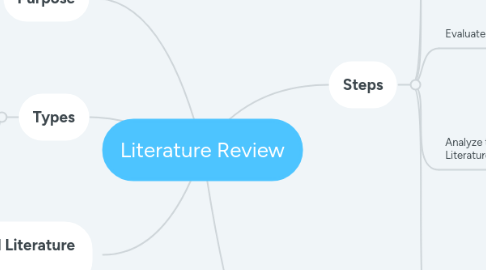
1. Purpose
1.1. Demonstrates comprehensive knowledge on the topic
1.2. Identifies gaps in current research
1.3. Establishes the context of your research
2. Types
2.1. Narrative Review
2.2. Systematic Review
2.3. Meta-Analysis
2.4. Scoping Review
3. Tips for Successful Literature review
3.1. Always stay focused on your research question
3.2. Keep a record of your search process
3.3. Interpret and Evaluate, dont just summarize
3.4. Remember the quality of your sources matter. Pay attention to details!
4. Steps
4.1. Define The Scope
4.1.1. Topic of Interest
4.1.2. Time-frame for the studies
4.1.3. Type of the Literature (articles, theses, books)
4.2. Search For Relevant Literature
4.2.1. Use Relevant Databases
4.2.1.1. Google Scholar
4.2.1.2. JSTOR
4.2.1.3. PubMed
4.2.2. Use Keywords Related to Your Topic
4.2.3. Use Citation Tracking
4.3. Evaluate and Select Sources
4.3.1. Check the Publication Date
4.3.2. Check the Author's Credentials
4.3.3. Check if the Source is Peer Reviewed
4.4. Analyze the Selected Literature
4.4.1. Identify Common Themes
4.4.2. Identify Methodologies Used
4.4.3. Identify Results and Conclusions
4.5. Write the Review
4.5.1. Organize by Themes or Trends
4.5.2. Summarize Each Source
4.5.2.1. Writing a Summary
4.5.2.1.1. Author's Purpose
4.5.2.1.2. Methodologies Used
4.5.2.1.3. Main Findings
4.5.2.2. Evaluate the Source
4.5.2.2.1. Contribution to the Field
4.5.2.2.2. Weakness and Limitations
4.5.3. Draw Conclusions
4.5.3.1. State What has been Learned
4.5.3.2. Identify Gaps or Unanswered Questions