
the State Compulsory Education Standard approved by the Republic of Kazakhstan.


the State Compulsory Education Standard approved by the Republic of Kazakhstan.
da Mukhamed Tashkenbaev
1. How to use this template
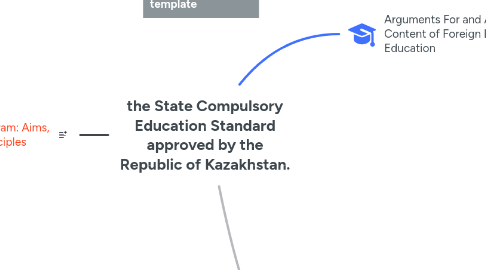
2. Analysis of the Program: Aims, Objectives, and Principles
2.1. Aims: The primary aim of the Subject program is to ensure that students acquire essential knowledge and skills that will prepare them for effective participation in society. This involves fostering critical thinking, creativity, and the ability to communicate in various contexts.
2.2. Objectives: Knowledge Acquisition: To provide students with a strong foundation in key subject areas. Skill Development: To develop essential skills, including problem-solving, collaboration, and communication. Cultural Awareness: To promote understanding and appreciation of different cultures, especially in foreign language education. Lifelong Learning: To encourage students to develop a mindset geared toward continuous learning and adaptation.
2.3. Main Principles: Student-Centered Learning: Emphasis on active learning where students take an active role in their education. Inclusivity: Ensuring that the program accommodates diverse learning needs and backgrounds. Interdisciplinary Approach: Encouraging connections between different subjects to enhance understanding and application. Assessment for Learning: Using assessments not only to evaluate but also to enhance learning processes.
3. Arguments For and Against the Content of Foreign Language Education
3.1. Arguments For: Global Competitiveness: Proficiency in foreign languages is increasingly important in a globalized world, enhancing students' job prospects and cultural exchanges. Cognitive Benefits: Learning a foreign language is linked to improved cognitive abilities, such as better problem-solving and multitasking skills. Cultural Understanding: It promotes greater empathy and awareness of different cultures, which is essential in today's interconnected society.
3.2. Arguments Against: Resource Intensity: Implementing a comprehensive foreign language program requires significant resources, including trained teachers and learning materials. Standardization Issues: There may be concerns about a one-size-fits-all approach that does not account for regional linguistic diversity or varying student needs. Curriculum Overload: Adding foreign language education may overload the curriculum, potentially detracting from other critical subjects if not balanced properly.
4. Aim of Foreign Language Education According to the New Updated Program
4.1. Aim of Foreign Language Education According to the New Updated Program. The updated program aims to equip students with the ability to communicate effectively in a foreign language, thereby enhancing their cognitive and social skills. It focuses on:
4.1.1. Communicative Competence: Ensuring students can engage in meaningful conversations and comprehend spoken and written language. Cultural Literacy: Understanding cultural nuances and contexts that influence language use. Practical Application: Fostering the ability to use the language in real-life situations, which prepares students for global interactions.