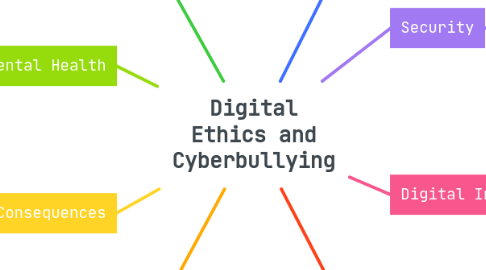
1.1. Digital Ethics: Understanding the consequences of online actions; individuals or organisations taking responsibility for their digital footprints. Cyberbullying: Cyberbullies may avoid accountability due to anonymity online.
2. Mental Health
2.1. Digital Ethics: Ethical responsibility to ensure the safety and well-being of digital users. Cyberbullying: detrimental effects on emotional well-being, self-esteem, and psychological health.
3. Legal Consequences
3.1. Digital Ethics: Ethics and laws intersect in ensuring that online actions have tangible consequences. Cyberbullying: The laws around this including criminal penalties and civil actions.
4. Harassment
4.1. Digital Ethics: The ethical responsibility to prevent or report harassment in digital environments. Cyberbullying: Repeated and targeted online attacks on individuals.
5. Privacy
5.1. Digital Ethics: Protecting personal information online;respecting individuals' rights to control their data. Cyberbullying: Cyberbullies may invade privacy, sharing personal data without consent.
6. Security
6.1. Digital Ethics: Ensuring safe and secure use of digital platforms to prevent misuse. Cyberbullying: Weak digital security can make it easier for bullies to attack without detection.
7. Digital Inclusion
7.1. Digital Ethics: Ensuring equal access to digital tools and resources for all individuals. Cyberbullying: Vulnerable populations (e.g., marginalised groups) may be more susceptible to bullying due to lack of access to resources for reporting.
8. Freedom of Expression
8.1. Digital Ethics: Balancing the right to speak freely online with the potential harm caused by harmful speech. Cyberbullying: Balancing the right to express opinions while preventing harmful or abusive behaviour online.