1.4. Presentations/writing sample to propose a solution to an existing or new problem, based on what students have learnt
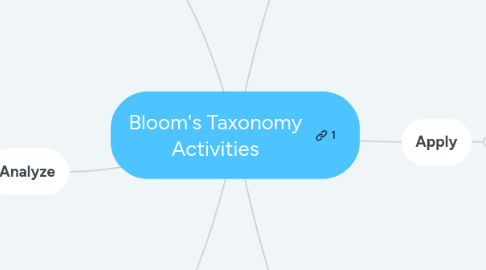
2. Analyze
2.1. Case studies: identify the function of component parts, how does changing one part affect the whole
2.2. Concept maps/Mini-maps: how do different features relate to each other, how do parts of a system position with relation to each other
2.3. Decision making: identify why pieces of the decision were made and not others, what is the impact/outcome a smaller change on whole
2.4. Peer feedback: help your fellow students understand how to make a change by shifting a smaller part of their process or system, why that change may have an impact
2.5. pros and cons of different approaches
3. Evaluate
3.1. Case studies
3.2. Projects to solve problems/issues
3.3. Critiques
4. Understand
4.1. Summary-focused writing prompt responses
4.2. True/False questions
4.3. Reading comprehension discussion
4.4. Explain meaning of critical terminology
4.5. Compare and contrast different practices
4.6. ePortfolio
5. Apply
5.1. Think-pair-share problem solving
5.2. Solve issues under certain scenario using the concept introduced.
5.3. Case studies, especially simpler ones
5.4. Apply critical terminology's usage through different disciplinary perspectives
5.5. Role play to show application skills
5.6. Taking a theory and relating it to their daily life