


1. Med-induced eye issues
1.1. Retinal changes/retinopathy
1.1.1. Chloroquine, hydroxychloroquine
1.2. Optic neuropathy
1.2.1. Amiodarone, ethambutol, linezolid
1.3. IFIS
1.3.1. Alpha-blockers (i.e. tamsulosin)
1.4. Color discrimination
1.4.1. Dig toxicity (yellow/green vision)
1.4.2. PDE-5 inhibitors (greenish tinge around objects)
1.4.3. Voriconazole (color vision changes)
1.5. Vision loss/abnormal vision
1.5.1. Dig toxicity (blurriness, halos)
1.5.2. PDE-5 inhibitors (vision loss)
1.5.3. Isotretinoin (decreased night vision, dryness, irritation)
1.5.4. Topiramate (visual field defects)
1.5.5. Vigabatrin (permanent vision loss)
1.5.6. Voriconazole (photophobia)
2. Otitis externa
2.1. **Ciprofloxacin + dexamethasone (Ciprodex)**
3. Abbreviations
3.1. D
3.1.1. Right
3.2. S
3.2.1. Left (Think sinister)
3.3. U
3.3.1. Both/Each
3.4. A
3.4.1. E"a"r
3.5. O
3.5.1. Eye (Think optic)
4. Formulations
4.1. 1ml = 20gtt
4.1.1. 1gtt = 0.05ml
4.2. Suspensions
4.2.1. shake well
4.3. Ointments
4.3.1. can make vision blurry
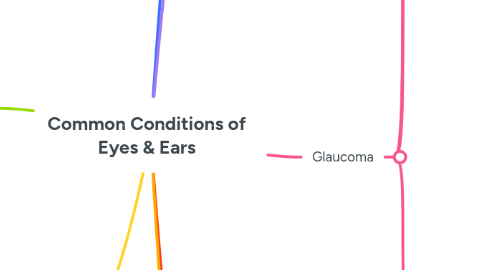
5. Glaucoma
5.1. Results in damage to the optic nerve & loss of the visual field (measured by visual field test)
5.2. IOP is above normal range of 12-22 mmHg
5.2.1. Drugs which increase IOP
5.2.1.1. Anticholinergics, decongestants, chronic steroids (esp eye gtt), topiramate
5.3. 2 Types
5.3.1. Open-angle type (most common)
5.3.1.1. Usually presents w/o sx
5.3.1.2. Treated w/ gtt &/or surgery
5.3.2. Closed-angle type
5.3.2.1. Medical **emergency ** treated surgically
5.3.2.2. Sudden increase in IOP due to blockage
5.3.2.2.1. Presents w/ eye pain, HA, & :arrow_down: vision
5.4. Tx Principles
5.4.1. Reduce aqueous humor production
5.4.1.1. B-blockers, like **timolol** or carbonic anhydrase inhibitors, like **dorzolamide**
5.4.1.1.1. ~22% decrease in IOP
5.4.1.1.2. Preferable if only one eye affected due to darkness w/ PG analogs
5.4.2. Increase humor outflow
5.4.2.1. Prostaglandin analogs, like **latanoprost**
5.4.2.1.1. Most effective (~30% decrease in IOP)
5.4.2.1.2. **Bimatoprost (lumigan)**
5.4.2.1.3. **Travaprost (Travatan Z)**
5.4.3. Both
5.4.3.1. A-2 agonists, like **brimonidine (Alphagan) + timolol (Combigan)**
5.4.3.1.1. **Brimonidine (Lumify)** used for eye redness
5.4.3.1.2. Dosed TID
5.4.3.1.3. Warnings: CNS depression
5.4.3.1.4. AEs: Sedation, dry mouth, dry nose
6. Conjunctivitis "pink eye"
6.1. If viral, likely due to adenovirus
6.2. Bacterial
6.2.1. Staph, S. pneumo, H. flu, or M. cat
6.2.2. **Moxifloxacin (Vigamox)**
6.2.3. **Neomycin/polymyxin B/dexamethasone (Maxitrol)**
6.2.4. **Ofloxacin (Ocuflox)**
6.2.5. **Trimethoprim/Polymyxin B (Polytrim)**