


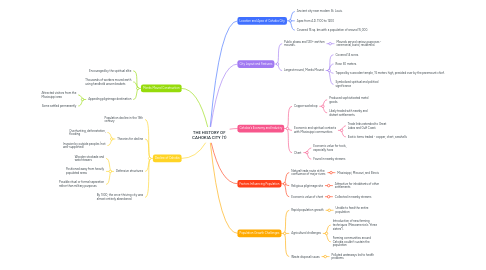
1. Monks Mound Construction
1.1. Encouraged by the spiritual elite
1.2. Thousands of workers moved earth using handheld woven baskets
1.3. Appealing pilgrimage destination
1.3.1. Attracted visitors from the Mississippi area
1.3.2. Some settled permanently
2. Decline of Cahokia
2.1. Population decline in the 13th century
2.2. Theories for decline
2.2.1. Overhunting, deforestation, flooding
2.2.2. Invasion by outside peoples (not well-supported)
2.3. Defensive structures
2.3.1. Wooden stockade and watchtowers
2.3.2. Positioned away from heavily populated areas
2.3.3. Possible ritual or formal separation rather than military purposes
2.4. By 1300, the once-thriving city was almost entirely abandoned
3. Location and Apex of Cahokia City
3.1. Ancient city near modern St. Louis.
3.2. Apex from A.D. 1100 to 1200
3.3. Covered 16 sq. km with a population of around 15,000.
4. City Layout and Features
4.1. Public plazas and 120+ earthen mounds.
4.1.1. Mounds served various purposes - ceremonial, burial, residential.
4.2. Largest mound, Monks Mound
4.2.1. Covered 14 acres.
4.2.2. Rose 30 meters.
4.2.3. Topped by a wooden temple, 15 meters high, presided over by the paramount chief.
4.2.4. Symbolized spiritual and political significance
5. Cahokia's Economy and Industry
5.1. Copper workshop
5.1.1. Produced sophisticated metal goods.
5.1.2. Likely traded with nearby and distant settlements.
5.2. Economic and spiritual contacts with Mississippi communities
5.2.1. Trade links extended to Great Lakes and Gulf Coast.
5.2.2. Exotic items traded - copper, chert, seashells
5.3. Chert
5.3.1. Economic value for tools, especially hoes
5.3.2. Found in nearby streams
6. Factors Influencing Population
6.1. Natural trade route at the confluence of major rivers
6.1.1. Mississippi, Missouri, and Illinois
6.2. Religious pilgrimage site
6.2.1. Attractive for inhabitants of other settlements
6.3. Economic value of chert
6.3.1. Collected in nearby streams
7. Population Growth Challenges
7.1. Rapid population growth
7.1.1. Unable to feed the entire population
7.2. Agricultural challenges
7.2.1. Introduction of new farming techniques (Mesoamerica's "three sisters").
7.2.2. Farming communities around Cahokia couldn't sustain the population
7.3. Waste disposal issues
7.3.1. Polluted waterways led to health problems