
Management by Walking About

Explore the detailed intricacies of the Management by Walking About strategy through our comprehensive mindmap. It provides a well-rounded understanding of this management technique, from its origins in Hewlett-Packards corporate culture to its adoption by prominent thought leaders like Tom Peters and Robert Waterman. Our mindmap addresses the manifold benefits of this approach, including improved communication with staff, a clearer view of on-ground realities, and early issue identification....

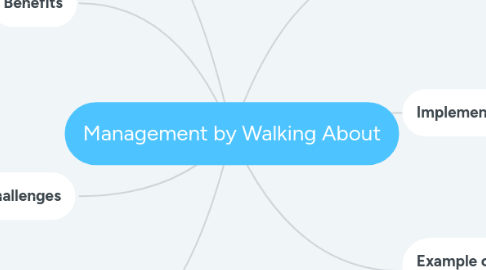
1. Definition
1.1. Management strategy involving managers direct interaction with staff.
2. Benefits
2.1. Better communication with employees
2.1.1. Direct interaction
2.1.2. Immediate feedback
2.2. Understand the ground reality
2.2.1. Actual working conditions
2.2.2. Employee challenges
2.3. Discovery of issues before they escalate
2.3.1. Direct observation of operations
2.3.2. Early identification of problems
3. Challenges
3.1. Resistance from employees
3.1.1. Fear of micromanagement
3.1.2. Uncomfortable with unexpected visits
3.2. Misinterpretation of purpose
3.2.1. Perceived as spying or lack of trust
3.3. Overdoing it
3.3.1. Disruption of normal work flow
3.3.2. Neglecting other managerial tasks
4. How it fits in with other management styles
4.1. Complements with transformational leadership
4.2. Balance with strategic and operational management tasks
4.3. Enhances the agility of Agile project management
5. Origins
5.1. Hewlett-Packard corporate culture
5.2. Adopted by Tom Peters and Robert Waterman
6. Implementing MBWA
6.1. Random, informal visits to workplace
6.1.1. Not scheduled
6.1.2. Allows observation of normal processes
6.2. Questions and discussions with employees
6.2.1. Involve in their tasks
6.2.2. Ask about their ideas or opinions
6.3. Recognition of good work
6.3.1. Personal acknowledgment
6.3.2. Encourage motivation and productivity