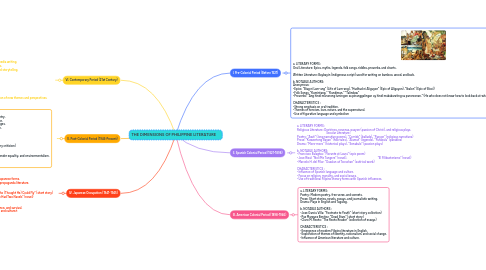
1.1. a. LITERARY FORMS: Digital Literature: E-books, blogs, online journals, and social media writing. Hybrid Forms: Blending of traditional and contemporary forms. Performance Literature: Spoken word poetry, slam poetry, and storytelling. b. NOTABLE AUTHORS : •Paolo Manalang: “The Man Who Could Fly” (novel) •B.J. Pascual: “The Girl Who Drank the Moon” (novel) •R. Eric Thomas: “Here for It” (essay collection) CHARACTERISTICS : •Emphasis on technology and digital media. •Exploration of new themes and perspectives. •Growing diversity and inclusivity in Filipino literature.
2. V. Post-Colonial Period (1946-Present)
2.1. a. LITERARY FORMS: Poetry: Free verse, concrete poetry, and performance poetry. Prose: Short stories, novels, essays, and creative nonfiction. Drama: Plays in English, Tagalog, and other Filipino languages. Other Forms: Graphic novels, comics, and digital literature. b. NOTABLE AUTHORS : •Lualhati Bautista: “Dekada '70” (novel) •F. Sionil Jose: “The Rosales Saga” (novel series) •Bienvenido Lumbera: “Likhang Dila, Likhang Diwa” (literary criticism) CHARACTERISTICS : •Exploration of diverse themes, including social justice, gender equality, and environmentalism. •Use of various literary styles and techniques. •Growing influence of global literature and culture.
3. I. Pre-Colonial Period (Before 1521)
3.1. a. LITERARY FORMS: Oral Literature: Epics, myths, legends, folk songs, riddles, proverbs, and chants. Written Literature: Baybayin (indigenous script) used for writing on bamboo, wood, and bark. b. NOTABLE AUTHORS: Anonymous: •Epics: “Biag ni Lam-ang” (Life of Lam-ang), “Hudhud ni Aliguyon” (Epic of Aliguyon), “Ibalon” (Epic of Bicol) •Folk Songs: “Kumintang,” “Kundiman,” “Talindaw” •Proverbs: “Ang hindi marunong lumingon sa pinanggalingan ay hindi makakarating sa paroroonan.” (He who does not know how to look back at where he came from will not reach his destination.) CHARACTERISTICS : •Strong emphasis on oral tradition. •Themes of heroism, love, nature, and the supernatural. •Use of figurative language and symbolism
4. IV. Japanese Occupation (1941-1945)
4.1. a.LITERARY FORMS: Poetry: Haiku, tanka, and other Japanese forms. Prose: Short stories, essays, and propaganda literature. b. NOTABLE AUTHORS: •Bienvenido Santos: “The Man Who (Thought He) Could Fly” (short story) •Nick Joaquin: “The Woman Who Had Two Navels” (novel) CHARACTERISTICS : •Focus on themes of war, resistance, and survival. •Influence of Japanese literature and culture.t
5. II. Spanish Colonial Period (1521-1898)
5.1. a. LITERARY FORMS: Religious Literature: Doctrines, novenas, pasyon (passion of Christ), and religious plays. Secular Literature: Poetry: “Awit” (long narrative poems), “Corrido” (ballads), “Pasyon” (religious narratives) Prose: “Kuwentong Bayan” (folk tales), “Alamat” (legends), “Parabula” (parables) Drama: “Moro-moro” (historical plays), “Senakulo” (passion plays) b. NOTABLE AUTHORS: •Francisco Balagtas: “Florante at Laura” (epic poem) •Jose Rizal: “Noli Me Tangere” (novel), “El Filibusterismo” (novel) •Marcelo H. del Pilar: “Dasalan at Tocsohan” (satirical work) CHARACTERISTICS : •Influence of Spanish language and culture. •Focus on religion, morality, and social issues. •Use of traditional Filipino literary forms with Spanish influences.
6. III. American Colonial Period (1898-1946)
6.1. a. LITERARY FORMS: Poetry: Modern poetry, free verse, and sonnets. Prose: Short stories, novels, essays, and journalistic writing. Drama: Plays in English and Tagalog. b. NOTABLE AUTHORS : •Jose Garcia Villa: “Footnote to Youth” (short story collection) •Paz Marquez Benitez: “Dead Stars” (short story) •Claro M. Recto: “The Recto Reader” (collection of essays) CHARACTERISTICS : •Emergence of modern Filipino literature in English. •Exploration of themes of identity, nationalism, and social change. •Influence of American literature and culture.