Implementing Target Student Intervention with Personalized Learning Plans to Improve Math Perform...

Laten we beginnen. Het is Gratis
of registreren met je e-mailadres
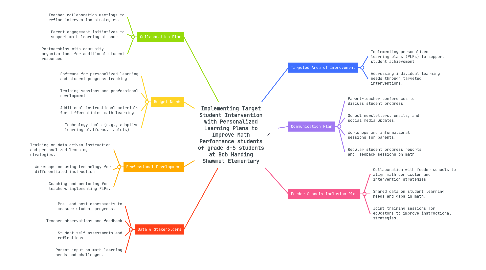
Implementing Target Student Intervention with Personalized Learning Plans to Improve Math Performance students of grade 3-5 students at Bob Harding Shawmut Elementary Door Mind Map: Implementing Target Student Intervention with Personalized Learning Plans to Improve Math Performance students of grade 3-5 students at Bob Harding Shawmut Elementary

1. Collaboration Plan

1.1. Teacher collaboration meetings to refine intervention strategies.

1.2. Parent engagement initiatives to support math learning at home

1.3. Partnerships with community organizations for additional student resources

2. Budget Needs

2.1. Software for personalized learning and student progress tracking

2.2. Training sessions and professional development

2.3. Additional instructional materials for differentiated math learning

2.4. Technology tools (e.g., adaptive learning platforms, tablets)

3. Professional Development

3.1. Training on data-driven instruction and personalized learning strategies.

3.2. Workshops on using technology for differentiated instruction

3.3. Coaching and mentoring for teachers implementing PLPs.

4. Data & Stakeholders

4.1. Pre- and post-assessments to measure student progress.

4.2. Teacher observations and feedback

4.3. Student self-assessments and reflections

4.4. Parent input on math learning needs and challenges.

5. Targeted Area of Improvement

5.1. Implementing personalized learning plans (PLPs) to support student achievement

5.2. Addressing individual learning needs through targeted interventions.

6. Communication Plan

6.1. Parent-teacher conferences to discuss student progress

6.2. School newsletters, emails, and social media updates.

6.3. Workshops and informational sessions for parents.

6.4. Regular student progress reports and feedback sessions on math

7. Feeder Schools Inclusion Plan

7.1. Collaboration with feeder schools to align math curriculum and intervention strategies

7.2. Shared data on student learning needs and gaps in math.

7.3. Joint training sessions for educators to improve instructional strategies.