

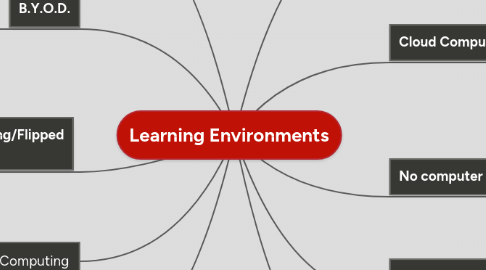
1. One Computer
1.1. Students can use for enrichment. , remediation, e-books, and educational interactive games
1.1.1. Advantages-It is better than not having a computer available..
1.1.2. Disadvantages-Very limiting.
2. B.Y.O.D.
2.1. Students can use for student response system, e-books, reflective practice journaling.
2.1.1. Advantages-Less expensive for the school.
2.1.2. Disadvantages-Equity concerns and increased distractions.
3. Blended Learning/Flipped Classrooms
3.1. 24/7 lessons, repeatedly watch videos, e-books
3.1.1. Advantages-Students benefit from face-to face instruction and online instruction..
3.1.2. Disadvantages- May have access issues.
4. Tablet Computing
4.1. Students can access e-books, collaborate with students, individualize instruction.
4.1.1. Advantages-All students have access.
4.1.2. Disadvantages-The programs might not work that students need.
5. One-to-one
5.1. Students use for I-Ready, webquests and PBL
5.1.1. Advantages-All students have access
5.1.2. Disadvantages- Students may not have access at home..
6. Computer Stations
6.1. Students conduct research, use interactive educational games, and collaborate on PBL.
6.1.1. Advantages-Students have access totechnology.
6.1.2. Disadvantages- Limited access based on rotation.
7. Cloud Computing
7.1. Teacher can collaborate with students,can collaborate with students
7.1.1. Advantages-Can access information anytime and any place.
7.1.2. Disadvantages-If the Internet goes down, no none has access.
8. No computer by design
8.1. Students use more face-to-face communication, collaboration and hands-on activities.
8.1.1. Advantages-Less expensive
8.1.2. Disadvantages-No need to troblshoot.
9. Interactive Whiteboards
9.1. Use student responders for formative assessments, web quests, and interactive lessons.
9.1.1. Can easily check for understanding.
9.1.2. Disadvantages- Very expensive.
10. Online Learning
10.1. 24/7 Lessons, access expert guest, and repeatedly watch videos.
10.1.1. Advantages-flexible scheduling.
10.1.2. Disadvantages-Less face to face interactions.