

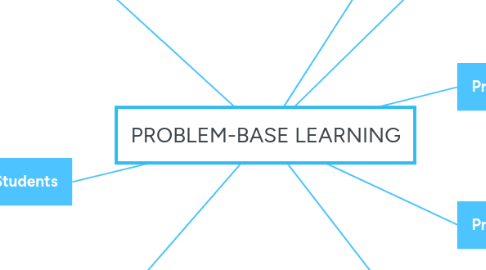
1. Tutor
1.1. Most Important Skills
1.1.1. 1. Provides frequent feedback 2. Promotes integration 3. Asks Questions and probes reasoning process 4. Helps students to balance basic and clinical sciences in the problem 5. Encourages critical appraisal of information 6. Encourages student control of the tutorials 7. Facilitates and supports good interpersonal relationships in the group
2. Students
2.1. Role
2.1.1. Learner Leader Facilitator Recorder Elaborator Critic Constructive Evaluator Encourager Active Discussant Knowledgeable Punctual Committed Scribe
3. How Does PBL Group Facilitate Learning
3.1. Answering questions about a text Taking notes Discussion with other students Teaching peers Summarizing Formulating a hypothesis Drawing a concept map
4. What
4.1. learning method based using problems as a starting point for integration of new knowledge
5. Aims of the PBL Group
5.1. Fostering self-directed
5.2. Facilitation of learning
5.3. Development of social skills
6. Problem
6.1. Role
6.1.1. Problem solving skills
6.1.2. Integrative thinking and Behavior
6.1.3. Learning how to learn
7. Process
7.1. Seven Jumps
7.1.1. 1. Clarify terms 2. Define the problem 3. Analyze the problem 4. Summarize 5. Formulate learning objectives 6. Self study based on step 5 7. Report back in the group