

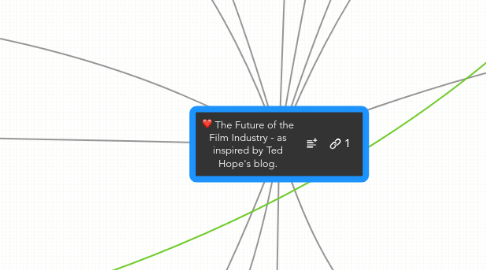
1. There's a danger of creating spam that will turn off people. It's better to put out trailers and even the film so people will then join up and willingly provide their emails.
2. We don’t encourage (or demand) audience “builds” prior to production. Why shouldn’t every filmmaker or filmmaking team be required to have 5000 Fans prior to greenlight?
2.1. How do we measure "fans"?
2.1.1. Mailing list? What's to keep an independent or larger production company from rolling over it's mailing list? How are this number counted and kept legitimate from film to film?
2.1.2. Twitter followers or Facebook "likes"? Twitter is, for the time being, at least harder to game. But with Facebook, a company can purchase a massive, massive number of ads that would easily guarantee 5,000 "fans" over a truly indie film.
2.1.2.1. Instead of uying short term fans we should cultivate a following by making compelling films that people want to see without being bombarded with ads to make them think they want to see them. Otherwise these fans will wise up fast and ignore future ads, unless the promise of a good film is kept.
2.2. And how do we ensure that films which are never "greenlite" (i.e. indie productions that are self contained) build their audience base before hand?
2.2.1. Put out blogs, "making of", and behind the scenes videos to garner interest and attention. Check out the Workbook Project for ideas.
3. America has no funding for the arts so filmmakers have to develop material based on pre-existing markets instead forward thinking inspiration.
3.1. Filmmakers should think about creating markets besides the existing ones. Blair Witch is a case in point.
4. We fail to utilize the two years from greenlight to release to market our film and build our audiences.
4.1. Audience = Co-creators = vested interest in a project's success.
4.1.1. With video phones, everybody's a potential film maker
4.1.1.1. With the wiki, everybody's a potential writer
4.1.1.1.1. (Hello Jan!) I am very excited about the possibilities of social storytelling using tools like wikis and video hosting sites. A lot can be done there to create either something from scratch, or to build on top of a story that already exist (backstory, or side stories).
4.2. We should think of internet marketing tools like social networks as an area of film production expertise, just as we do sound or cinematography
4.2.1. Check out Jon Reiss's ideas on the PMD crew position:
5. Filmmakers don’t own their audiences yet
5.1. Let’s face it: we are not good at providing filmmakers with long term career planning.
5.2. We don’t insist that our artists are also entrepreneurs. We don’t encourage direct sales to the fans. We don’t focus on building mailing lists.
5.2.1. How the film is sold, how it is packaged, how it is released should all be heavily influenced by the film's most involved creators. Each film can and should be a unique approach from a long-list of options.
5.3. Creators, Distributors, and Marketers have accepted a dividing line between art and commerce, between content and marketing.
5.4. We don’t recognize that one of film’s greatest assets is its ability to generate data.
5.5. The audience should, rather, own the film maker.
6. We have done very little thinking or discussing about how to make events out of our movies.
6.1. Where’s the embrace of the short-term release?
6.1.1. FToM will be released online for free (under a CC license), so the idea of turning the limited screenings into events is something I'm very interested in.
6.2. The film business remains a single product industry.
6.2.1. Is this an accurate statement?
6.2.1.1. For the most part I believe so, but what about films that release games, and toys, and clothes, and comics? Not all films can do this - so what other options do non-blockbuster film's have for branching out?
6.3. Very interesting post on .:WBP about hosted screenings with limited showings to really make the showing of a film an event.
6.4. Creative story expansion models that would facilitate audience aggregation and participation (to seed, build, drive audiences).
6.5. We ignore film’s most unique attribute. Film forces us to feel, to think, to engage — let’s not ignore that.
7. Net Neutrality - and it's importance to film
7.1. Embrace technology! Nokia's GPS-based video/stills application is intriguing for example. Media is accessed via a map and may be "played back". I'm interested in seeing a narrative film produced that uses this application.
8. We love to read, talk, and engage more about the business than we do about the art.
8.1. The film business is a business of selling art which has to exist first. So we need to focus on getting the art right before we go about selling it
9. We – neither the creators, audiences, or their representatives – don’t make a stink when aggregators get rich, and the content creators live on mere pittances.
9.1. DIY filmmakers don't make those deals. They market their films on their own.
9.1.1. But even DIY filmmakers at some point go to venues like iTunes, Netflix, and other streaming services - and the deals could be more fairly balanced.
10. We still think of movies as things people will buy
10.1. We need a greater embrace of innovation and experimentation in terms of both business models and building communities.
10.1.1. Distribution should be as creative and as unique and fitting to the film. There are all kinds of films. There should be all kinds of distribution models. e.g. Blair Witch or Four Eyed Monsters.
10.2. We allow consumers to think content should be free but it is okay that the hardware they play it on is very very expensive.
10.3. We need to streamline the process of the transformation of leisure time into both intellectual and social capital (i.e movie going and its byproducts).
10.3.1. Tthis sounds like the movement toward docs, true stories and reality. All are based on real life things.
10.4. We need to think of movies as things people see, appreciate, and are moved by
10.4.1. I couldn't agree more. It would great to see a list of 5 or 10 steps or practices storytellers could use to get us from A to B. Any ideas?
10.4.1.1. I don't think it can be defined. This is the art of making a compelling work. You'll know when you have the right idea. But, it may take a few tries.
10.5. Why wouldn't a "movie" be something that engages individuals for a lifetime? Think of franchise movies like "Superman", but an ongoing narrative.
11. build a sustainable investor class
11.1. How can tools like Kickstarter be used to create long-term investors and supporters? What more can be done to integrate them into the end product's success?
11.1.1. These tools rely on an audience. It may be good to have them in place prior to putting out the film and trailers. Use branding so that if you have a successful campaign, people will return when they see your next project.
11.2. There is no structure or mechanism to increase liquidity of film investments
11.3. The film business remains the virtually exclusive domain of the privileged
11.3.1. This is fast becoming a fallacy, with affordable technology and democratic internet distribution models
11.4. Consider updating the "patron" model, connecting private investors to up-and-coming filmmakers. Reaching out directly to students?
11.5. Audience = investor. Would an audience member pay (invest) $50 up front for lifetime of "full access" to a project rather than $20 for 90 minutes @ a theater?
11.5.1. Personally, as someone who is quite active on Kickstarter (especially regarding film projects I enjoy) I would be open to the idea of something like this. But the "lifetime" part makes me uneasy - it might back a lot of filmmakers into a corner of having to continue to create, without any additional funds. I'm always more encouraged by a film by film structure.
11.6. The problem here is that film investment is really a gamble, not an investment. Less than 50% of Hollywood films make a profit, let alone indies where the ratio is more like 1% depending on curation..
11.6.1. That's an interesting point - I'd like to see some numbers based on indie film success. Is that "1%" example a product of too many filmmakers putting all their eggs into one basket (festivals like Cannes, SXSW)? Or are the majority of indie films released through new outlets still not meeting their debts?
12. Cinema: The price of tickets goes up because there aren’t the people to go to the showings but then because of the prices going up people are deterred by the cost. Discuss....
12.1. Exactly, Hannah. I just read an article yesterday announcing the $20 movie ticket.
12.2. @rickrey If the studios need to charge $20 to stay afloat, I say let them. Just one step closer to an outdated biz model...
12.3. Product placement is one solution.
12.3.1. This is a topic that I have some strong feelings on - especially regarding the internet and how stories are told currently using product placement and integration. Honestly, I strongly dislike it... at least in most cases.
12.3.1.1. Example: Rosario Dawson was involved with an online series that was heavy on the ad integration - and it was just an awful experience. To attach a name like her's to a project, and then to turn around and release that level on content... was not helpful to the future of storytelling.
12.3.1.2. Example: But, the work Spike Jones did with Absolute for "I am Here" was fantastic. It never felt like I was watching something influenced by ad teams or ROI needs. I can get behind that kind of partnering with products and brand-names.
12.3.1.2.1. I think this example worked so well, because "I am Here" existed on a few levels: there was the short film itself (which felt untouched by Absolute), and then there was the online experience of watching the film, which had very simple ad integration into it, plus the social tools for sharing that online experience.