Types of agriculture
by Rudraksh Shah
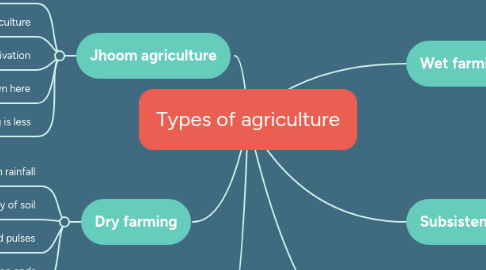
1. Dry farming
1.1. It is practised where the rainfall is less irrigation facility are also less and the agriculture is depend only on rainfall
1.2. Only one crop is taken during the year to maintain the fertility of soil
1.3. Crops like millet and pulses
1.4. Wheat and gram are grown in the humid soil of bhal region of Gujarat after the monsoon ends
2. Jhoom agriculture
2.1. This type of cultivation is practised in dense forest
2.2. Real forest are destroyed or burnt to clear the land for agriculture
2.3. after 2-3 years when the soil fertility is reduced the area is left by the people and they migrated to another area and in same way agriculture is practice this type of agriculture is called shifting cultivation
2.4. Mostly food grains and vegetables are grown here
2.5. Per actor production in such farming is less
3. Intensive farming
4. Subsistence farming
4.1. The cultivation wearing the agriculture production is consumed by the family is called subsistence farming
4.2. Farmer has smaller size of farms and less facility of irrigation
4.3. The can't afford the use of modern farm implements
4.4. From production is just enough for the use of family
4.5. In most of India Today substance farming is the main activity of the maintenance
5. Wet farming
5.1. It is practised in the region where there is sufficient rainfall and the has the irrigation facility
5.2. Where there is no rainfall or if it is not sufficient then more than one crop can be taken with the help of irrigation
5.3. Cotton , wheat , vegetables are grown in this soil
6. Plantation agriculture
6.1. big gardens are used to raise crops which give production for longer time such farming is called plantation agriculture
6.2. Yah crops are maintained with great care and preseverance
6.3. It requires used finance intensive planning, technical knowledge, machines, fertilizers, irrigation facility, protection, conservation and transportation facility.

