

Reproduction in Plants
by Abhinav Gupta
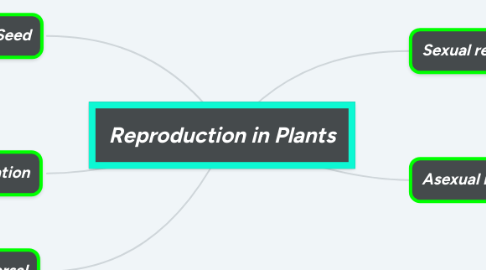
1. Structure of the Seed
1.1. Seed coat
1.1.1. Micropyle
1.2. Cotyledons
1.3. Embryo
1.3.1. Radicle
1.3.2. Plumule
1.4. Epicotyl
1.5. Hypocotyl
2. Pollination
2.1. Agents of Pollination
2.1.1. Animal Pollination
2.1.2. Insect Pollination
2.1.3. Water Pollination
2.1.4. Wind Pollination
3. Seed Dispersal
3.1. By wind
3.2. By water
3.3. By animals
4. Sexual reproduction
4.1. Plants with seeds
4.1.1. Flowers
4.1.1.1. Structure of a typical flower
4.1.1.1.1. Sepals/Calyx
4.1.1.1.2. Petals/Corolla
4.1.1.1.3. Stamen/Androecium
4.1.1.1.4. Pistil/Gynoecium
4.1.1.2. Types of flowers
4.1.1.2.1. Unisexual flowers
4.1.1.2.2. Bisexual flowers
4.1.1.2.3. Complete flowers
4.1.1.2.4. Incomplete flowers
4.1.2. Cones
4.1.2.1. Male cones
4.1.2.2. Female cones
4.2. Seedless plants
4.2.1. Sporangium
4.2.1.1. Spores
4.2.1.1.1. Gametophyte
5. Asexual reproduction
5.1. Fragmentation
5.2. Budding
5.3. Spore Formation
5.4. Vegetative Propagation
5.4.1. Natural Methods
5.4.1.1. Roots
5.4.1.2. Stems
5.4.1.3. Leaves
5.4.2. Artificial Methods
5.4.2.1. Cutting
5.4.2.2. Grafting
5.4.2.3. Layering
5.4.2.4. Tissue Culture