

1. In conclusion
1.1. These research finding are exciting
1.1.1. The initiative outlined above could break that cycle of disadvantage (
1.1.2. The concept of working with parents in their homes, or at their place of work, contrasts quite markedly with the report of the Early Childhood Care and Education Working Group.
1.1.3. Their focus is on getting children and mothers access to childcare and institutionalised early childhood education.
1.1.4. Education from the age of three to five is undoubtedly vital, but without a similar focus on parent education and on the vital importance of the first three years, some evidence indicates that it will not be enough to overcome educational inequity.
2. The potential of early childhood development
2.1. To understand about 1000 words
2.2. Every chilf is born with a natural curiosity, if can suppressed dramatically during the third years of life
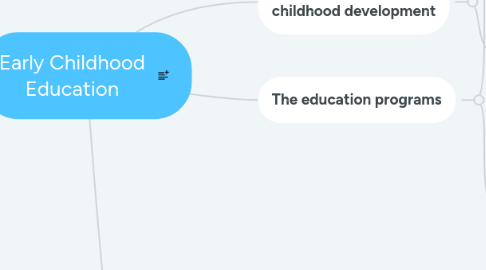
3. The education programs
3.1. A nation programme called ‘Headstart’
3.1.1. Was laucnhed in the United States in 1965
3.1.2. A lot of money was poured into it
3.1.2.1. The results have been disappointing
3.1.2.1.1. The programme was began too late
3.1.2.1.2. The parents were not involved
3.1.3. Help the children poorer families succed in school
3.2. A pilot programme was laucnhed in Missouri in the US that focus on parents as child’s first teachers
3.2.1. The programme involved trained parent- education
3.2.2. Visiting the parent’s home and working with tire parent, or parent,and the child.
3.2.3. Guidance on things to look for and expect as the child grows were provided
3.2.4. Guidance in fostering the child's intellectual, language, social and motor-skill development.
3.2.4.1. The results were phenomenal
3.2.4.1.1. the children in the programme were significantly more advanced in language development than their peers
3.2.4.1.2. Children in the programme performed equally well regardless of socio-economic disadvantages.
3.2.4.1.3. That interaction was not necessarily bad in poorer families
3.2.5. Periodic check-ups of the child's educational and sensory development
3.2.6. Parent-educators made personal visits to homes and monthly group meetings were held with other new parents to share experience and discuss topic of interest.