

Essay plan
by ruth fowkes
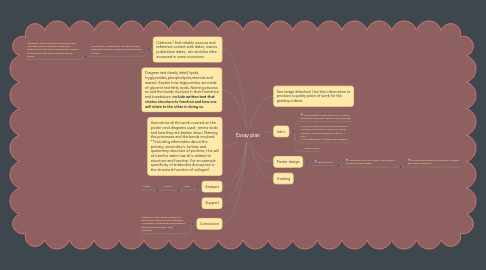
1. Citations ( find reliable sources and reference correct with dates, names , publication dates , etc and also date accessed in some occasions.
1.1. Quotations, if using word for word Quotes make sure all work is stated and punctuated as said.
1.1.1. Research.- read from the AQA level books and web sources available. Make sure research I’m valid for the assessment criteria and relates to the work put forth on the poster
2. Diagram and clearly labell; lipids, tryglycerides,phospholipids,steriods and waxes). Explain how triglycerides are made of glycerol and fatty acids. Naming process es and the bonds involved in their formation and breakdown. **include written text that relates structure to function and how one will relate to the other in doing so.**
3. Summarise all the work covered on the poster: and diagrams used ; amino acids and how they are broken down. Naming the processes and the bonds involved. **Including information about the primary, secondary’s ,tertiary and quaternary structure of proteins, this will all need to state how all is related to structure and function. For an example: specificity of antibodies & enzymes or the structural function of collagen).
4. Analysis
4.1. Point
4.1.1. Critical
4.1.1.1. Clarity
5. Support
6. Conclusion
6.1. Evidence ( back up the findings) in this instance with scientific backing. Use plenty of references and citations when quoting finings / data compiled.
7. See image attached. Use this information to produce a quality piece of work for the grading criteria
8. Intro:
8.1. Interpretation of the question or criteria, summarise and leave open to conclude later
8.2. Give a overview of the topics that will be covered in the essay ie: glucose, starch, cellulose. Cover assessment criteria 1.1 a,b,c. Use written texts to outline any evidence.
8.3. Needs a hook
9. Poster design
9.1. Eye catching
9.1.1. Flows with the topic and is can be easily followed by the reader
9.1.1.1. Includes wide ranges of imagery covering the criteria asked for.