


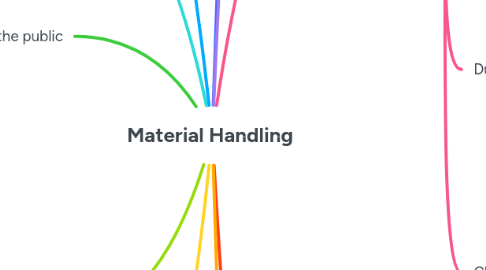
1. Stacking Materials
1.1. Thatch stored in bundls and used as needed
1.2. Concrete tiles loaded in small stacks distributed across roof
1.3. shingles stored on ridge. Never valley.
1.4. EPDM rolls are distributed across trusses and beams. Very heavy.
1.5. Never point load!
2. Ensure all materials are in a safe and convenient location
3. Protecting the public
3.1. Set up barricades around work area
3.2. Know appropriate hand signals for hoisting
3.3. Use proper signage
3.4. Use caution tape and delineators
4. Protect your materials
4.1. Do not allow materials to get wet
4.2. Store materials at elevated platforms
4.3. Use tarps
4.4. Store solvents in cool dry place
4.5. Cover insulation
4.6. Handle all materials with care
5. Hoisting materials
5.1. Consider strength of roof deck
5.2. Distribute material weight from the high point out
5.3. Load from the highest points
5.4. Gravel should be hoisted last
5.5. Gravel should only be hoisted when supervised
6. Weight Limits
6.1. Safe lifting procedures
6.1.1. Bend knees
6.1.2. Lift with Legs. Not back!
6.1.3. Keep Load close to body
6.1.4. Keep head up
6.1.5. Turn with feet. Not back!
6.1.6. Clear a safe path.
6.1.7. Be aware of slippery roof conditions
6.2. If unable to lift by self, ask a friend! Or use other equip.
7. Sloped roofs
7.1. Secure tools to your body
7.2. Alll materials must be secured
7.3. Anchor larger objects
7.4. Ensure proper training for steep slopes
7.5. When stacking materials, ensure round objects are placed parallel to rafters
8. WHMIS
8.1. know your materials
8.2. Refer to SDS's
8.3. Ask empoyer for PPE
8.4. Solvents/Adhesives
8.4.1. Do not use adhesives in confined spaces without appropriate PPE
8.4.2. Use of solvents require eye protection and gloves
8.4.3. Organic solvents in metal safety containers only
8.4.4. no smoking within 15 meter of any organic solvents
8.4.5. no open flames near ignitable sources
8.4.6. ensure appropriately charged fire extinguishers
8.5. Carbon monoxide
8.5.1. Heavier than oxygen
8.5.2. When in confined spaces, constant ventilation is recommended
8.5.3. Do not use a normal cartridge respirator.
8.5.4. Qualified personnel to provide written procedures
8.6. Dust
8.6.1. All dust can be harmful
8.6.2. Dust can cause eye iritation. Use eye protection and/or dust masks.
8.6.3. Must use approved respirators for specific irritants.
8.7. Chemical Burns
8.7.1. Wear appropriate PPE
8.7.2. Wash hands frequently
8.7.3. Know where eye wash stations are located
8.7.4. Treat with cool compress/running water
9. Torch on Roofs
9.1. Lift SBS rolls with correct lifting techniques
9.2. Propane torches
9.2.1. Flames can reach over 1093C
9.2.2. Wear appropriate PPE
9.2.3. Ensure torching equip in good working order
9.2.4. leak test with soapy water
9.2.5. Do not use matches to light torches. Striker required.
9.2.6. Hose damage
9.2.6.1. Ensure torch flame does not come in contact
9.2.6.2. Keep free of kinks
9.2.6.3. Do not step on or run over
9.2.6.4. Do not pull on hose
9.2.7. Never leave torches unattended
9.2.8. Keep 3 ft away from torches in use
9.2.9. Keep torches pointed upwards when storing. Do not rest on curb or roof edge.
9.2.10. Turning off torches
9.2.10.1. Turn off cylinders first
9.2.10.2. Disconect hoses at days end. Store correctly
9.3. Fire prevention
9.3.1. Inspect roof surfaces for flammable materials
9.3.2. Follow fire prevention procedures
9.3.3. do not torch directly onto cant strips
9.3.4. Remove metal before torching stripping
9.3.5. Be cautious when torching at air intake